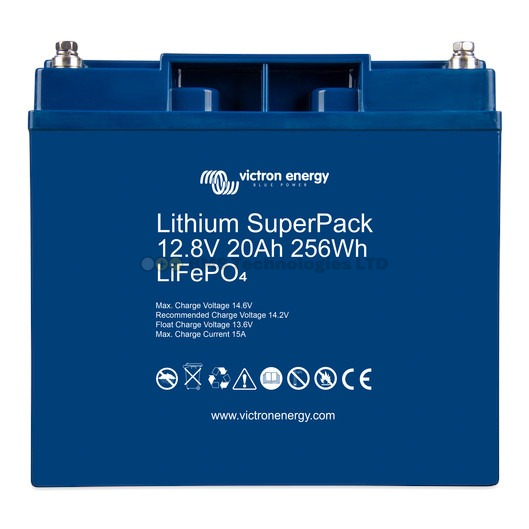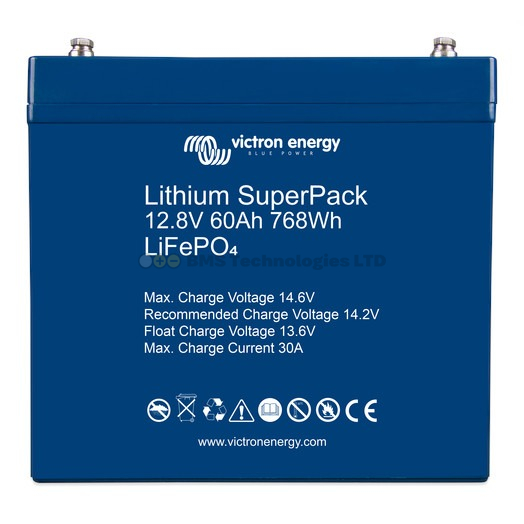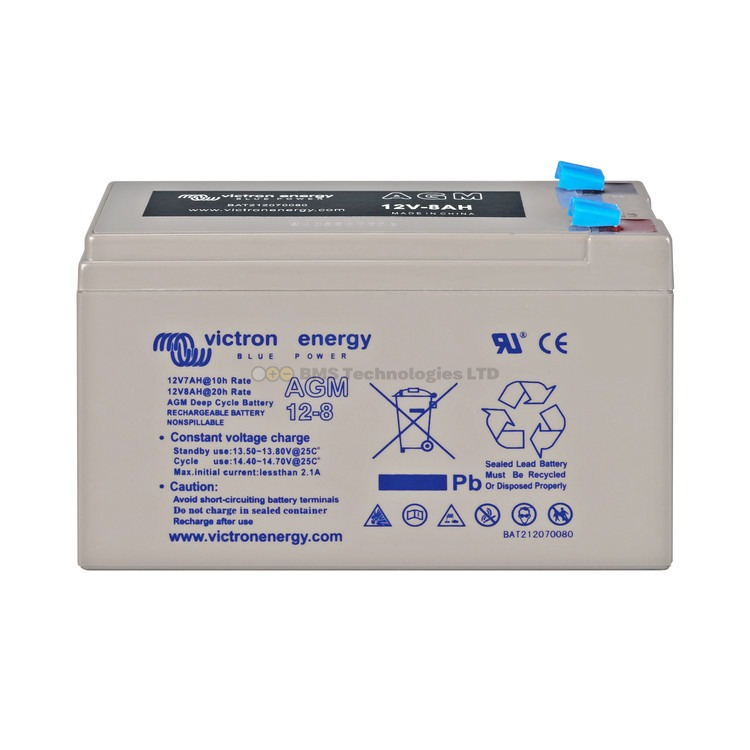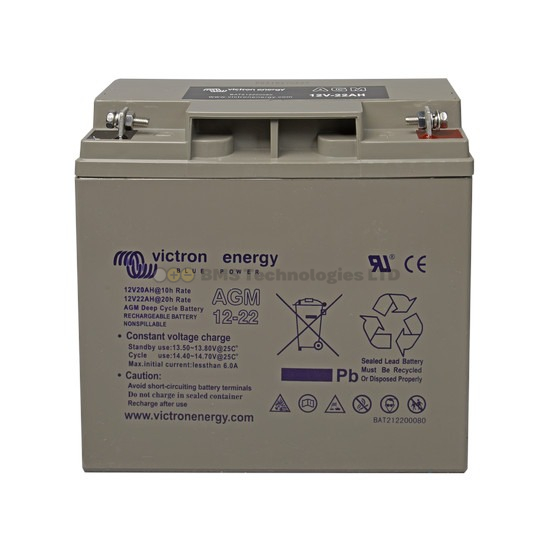
Choosing between lithium iron phosphate (LiFePO4) and AGM (Absorbent Glass Mat) batteries is one of the most consequential decisions in any off-grid system build. The upfront cost difference is dramatic, but the long-term economics tell a completely different story. This guide provides an honest, detailed comparison using real-world Victron products and UK pricing to help you make the right choice for your system.
Technology Overview
AGM Batteries
AGM is a type of sealed lead-acid battery. The electrolyte is absorbed into fibreglass mats between the lead plates, making it spill-proof and maintenance-free. AGM batteries have been the standard for off-grid systems for decades. They're reliable, well-understood, and cheap to buy.
Victron's AGM range includes the AGM Deep Cycle and AGM Super Cycle batteries in various capacities from 38Ah to 240Ah at 12V.
LiFePO4 Batteries
LiFePO4 (lithium iron phosphate) is a lithium-ion chemistry that's inherently safe, thermally stable, and exceptionally long-lasting. Unlike the lithium-ion cells in phones and laptops (which use cobalt-based chemistry), LiFePO4 doesn't suffer from thermal runaway, making it safe for enclosed installations in campervans, boats, and homes.
Victron's LiFePO4 range includes the Lithium Smart series (12.8V and 25.6V) with integrated BMS and Bluetooth, available from 100Ah to 200Ah.
Head-to-Head Comparison
| Specification | Victron AGM Super Cycle | Victron Lithium Smart LiFePO4 |
|---|---|---|
| Cycle life (to 80% DOD) | 250–500 cycles | 2500+ cycles |
| Usable capacity | 50% of rated Ah | 80–90% of rated Ah |
| Weight (100Ah, 12V) | ~30kg | ~12kg |
| Charge efficiency | 80–85% | 95–99% |
| Self-discharge rate | 3–5% per month | 1–2% per month |
| Charge time (0–100%) | 6–10 hours | 2–4 hours |
| Voltage curve | Slopes from 12.7V to 11.8V | Flat at ~13.2V, drops sharply below 10% SOC |
| Temperature range | -20°C to +50°C (charge and discharge) | -20°C to +50°C discharge, 5°C to +45°C charge |
| BMS required | No | Yes (built into Victron Lithium Smart) |
| Typical UK price (100Ah, 12V) | £180–£250 | £750–£1,000 |
Usable Capacity: The Hidden Advantage of Lithium
This is where the comparison starts to shift. A 100Ah AGM battery shouldn't be discharged below 50% state of charge regularly — doing so dramatically shortens its lifespan. That means your usable capacity is only 50Ah from a 100Ah AGM battery.
A 100Ah Victron Lithium Smart battery can be discharged to 20% SOC routinely, and to 10% occasionally, without significant degradation. That gives you 80–90Ah of usable capacity.
To get the same usable energy from AGM as a single 100Ah lithium battery, you'd need approximately 200Ah of AGM capacity. Suddenly the price gap narrows considerably.
Cycle Life: Where Lithium Wins Decisively
Cycle life is the number of complete charge-discharge cycles a battery can endure before its capacity drops below 80% of its original rating.
- AGM: 250–500 cycles at 50% depth of discharge (DOD). With daily cycling, that's roughly 1–2 years before replacement.
- LiFePO4: 2500+ cycles at 80% DOD. With daily cycling, that's approximately 7–10 years before replacement.
For a system that cycles daily (common in campervans and off-grid homes), you'd need to replace AGM batteries 4–5 times over the same period that a single set of lithium batteries would last.
Total Cost of Ownership
This is where the maths gets interesting. Let's compare the total cost of a 100Ah usable capacity over 10 years:
| Cost Factor | AGM Route | Lithium Route |
|---|---|---|
| Initial battery purchase | 2x 100Ah AGM = ~£400 | 1x 100Ah Lithium Smart = ~£850 |
| Replacements over 10 years | 4 replacement sets = ~£1,600 | None (lithium lasts 10+ years) |
| Total battery cost (10 years) | ~£2,000 | ~£850 |
| Weight | ~60kg (2 batteries) | ~12kg (1 battery) |
| Energy lost to inefficiency | ~15–20% per cycle | ~1–5% per cycle |
Over 10 years with daily cycling, lithium costs less than half the price of AGM — despite being more than double the upfront cost. The break-even point is typically around year 2–3.
Charging Speed and Efficiency
LiFePO4 batteries accept charge much faster than AGM. A 100Ah lithium battery can safely accept 50–100A of charge current, reaching full charge in 1–2 hours from 20% SOC. AGM batteries need a long absorption phase — the last 20% of charging can take 3–4 hours as the charge current tapers.
This matters in practical terms:
- Solar: Lithium batteries can absorb the full output of your MPPT controllers throughout the day, capturing more energy. AGM batteries often reach absorption early in the afternoon and then waste available solar while the charge current tapers.
- Driving (alternator charging): A 2-hour drive can fully charge a lithium battery from 30% SOC via a DC-DC charger. An AGM battery might only reach 70% in the same time.
- Generator: Generator run times are significantly shorter with lithium because the battery charges faster. Less fuel, less noise, less wear.
The Flat Voltage Curve
AGM batteries produce a steadily declining voltage as they discharge — from ~12.7V at 100% to ~11.8V at 50%. This means your 12V appliances, lights, and electronics receive less voltage as the battery depletes, potentially causing dimming lights and unreliable performance.
LiFePO4 batteries maintain a remarkably flat voltage at approximately 13.2V from 90% SOC all the way down to about 15% SOC, then drop sharply. Your appliances receive consistent power regardless of battery state.
Weight Comparison
Weight is critical for mobile installations:
- 100Ah AGM: approximately 30kg per battery
- 100Ah LiFePO4: approximately 12kg per battery
For equivalent usable capacity (200Ah AGM vs 100Ah lithium), the weight difference is 60kg vs 12kg — nearly 50kg saved. In a campervan, that's a meaningful difference for payload capacity and driving dynamics. On a boat, it's even more significant — weight below the waterline affects stability and performance.
When AGM Is Still the Right Choice
Despite lithium's advantages, AGM batteries are the better choice in certain situations:
- Tight budget with no plans for daily cycling: If the system will be used occasionally (weekend campervan, holiday cabin), AGM's lower upfront cost makes sense because you won't hit the cycle limit for many years
- Very cold environments: LiFePO4 cannot be charged below 5°C without risking permanent damage. AGM has no such restriction. Unheated installations in Scottish Highlands or exposed boat bilges in winter may favour AGM
- Simple installations: AGM requires no BMS, no CAN-bus wiring, and no DVCC configuration. Connect it to a charger and go
- Starter battery replacement: Engine starting batteries should remain lead-acid (AGM or conventional). LiFePO4 is designed for deep-cycle applications, not engine cranking
Which to Choose: By Application
| Application | Recommendation | Reason |
|---|---|---|
| Campervan (daily use) | LiFePO4 | Daily cycling, weight savings, fast charging on the road |
| Campervan (weekends only) | Either (AGM if budget tight) | Low cycle count makes AGM viable; lithium still better long-term |
| Sailboat (liveaboard) | LiFePO4 | Huge weight savings, daily cycling, fast charging from engine |
| Canal boat | LiFePO4 | Daily cycling, reduced generator run time |
| Off-grid home | LiFePO4 | Daily cycling makes lithium economics overwhelming |
| Backup power (occasional use) | AGM | Rarely cycles, lower cost, simpler installation |
| Garden shed / workshop | AGM | Lower cost for occasional use, temperature extremes less risky |
Victron Product Options
AGM Range
- Victron AGM Deep Cycle: 38Ah, 60Ah, 90Ah, 110Ah, 130Ah, 165Ah, 220Ah, 240Ah (12V)
- Victron AGM Super Cycle: 25Ah, 38Ah, 100Ah, 125Ah, 170Ah, 230Ah (12V)
LiFePO4 Range
- Victron Lithium Smart 12.8V: 100Ah, 150Ah, 200Ah
- Victron Lithium Smart 25.6V: 100Ah, 200Ah
The Lithium Smart batteries include an integrated BMS with Bluetooth, eliminating the need for a separate BMS unit in most installations.
Summary
For any system that cycles daily, LiFePO4 is the better investment despite the higher upfront cost. Over 5–10 years, the total cost of ownership is significantly lower, the usable capacity per kilogram is dramatically better, and the charging efficiency means you capture more of your solar or alternator energy. AGM remains a sensible choice for low-budget, occasional-use, or very cold-climate installations where the simplicity and low upfront cost outweigh the long-term economics. For a detailed guide on sizing lithium batteries for your campervan, see our lithium battery sizing guide.