Choosing the right inverter size is one of the most common dilemmas for motorhome owners. Too small and you can't run the appliances you want. Too large and you waste money, space, and standby power. This guide provides practical, real-world data on what you can run on a 2,000W vs 3,000W Victron inverter, with battery impact calculations for each appliance.
Understanding Inverter Ratings
Before comparing sizes, a quick note on ratings. When Victron specifies a 2,000VA or 3,000VA inverter, the VA (volt-ampere) rating is the continuous power output. Most household appliances are rated in watts (W), and for resistive loads (heaters, kettles), 1 VA = 1W. For motor-driven or electronic loads, the actual wattage may be slightly lower than the VA rating, but for sizing purposes, you can treat them as equivalent.
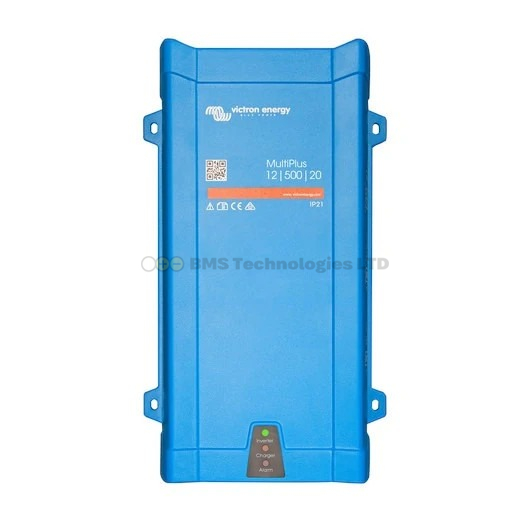
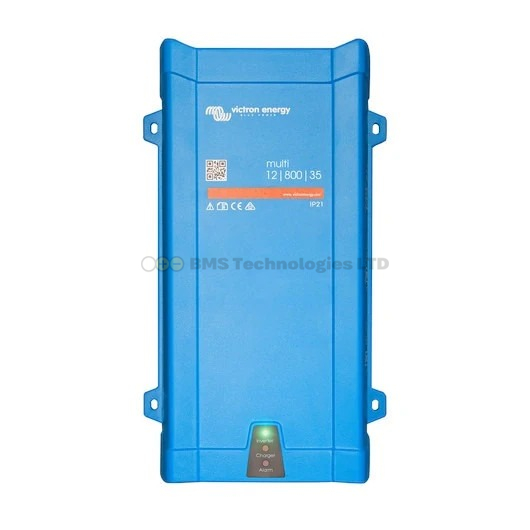
All Victron inverters can also handle surge loads above their continuous rating for short periods. A MultiPlus 12/2000 can handle approximately 4,000W surge for a few seconds, which helps with motor startup loads (fridge compressors, power tools). A MultiPlus 12/3000 handles approximately 6,000W surge.
What a 2,000W Inverter Can Run
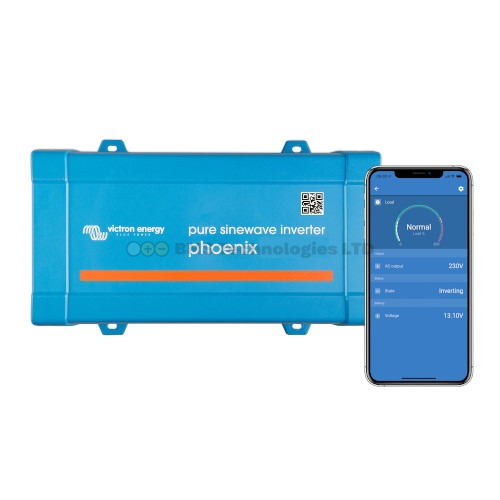
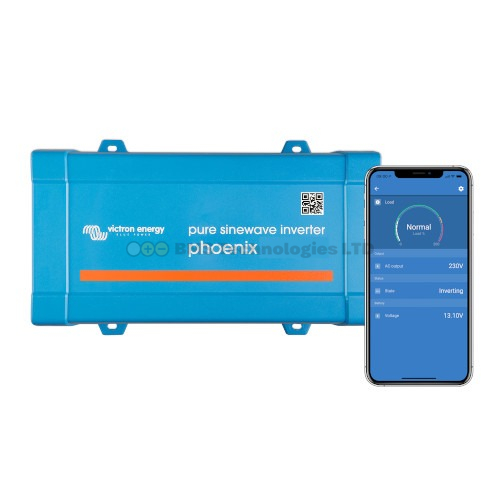
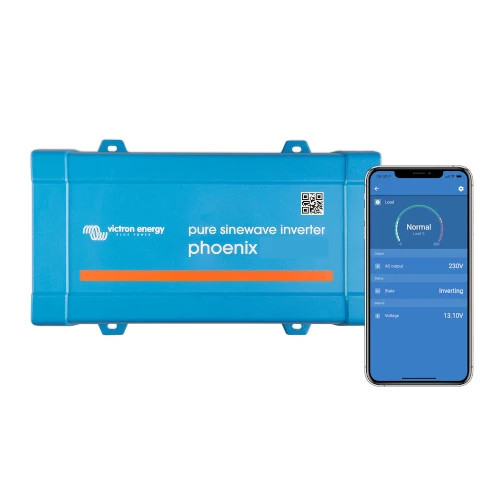
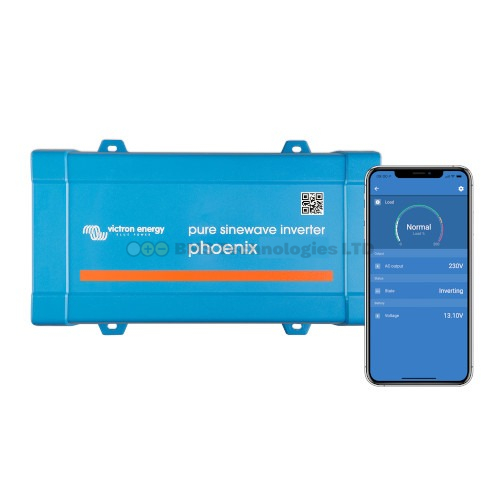
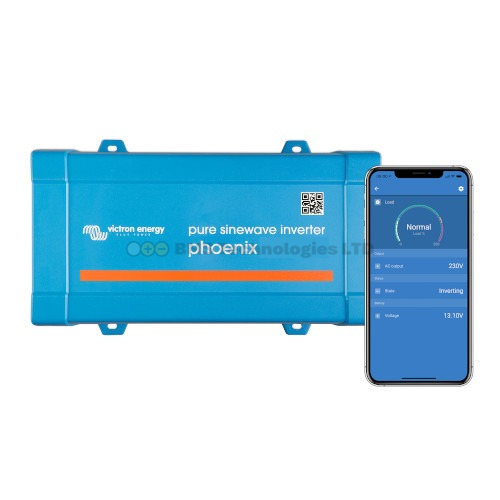
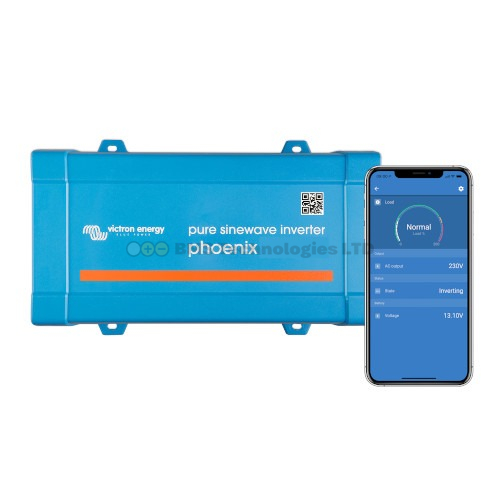
The Victron MultiPlus 12/2000/80 or Phoenix 12/2000 handles most common motorhome appliances individually. Here's a practical breakdown:
| Appliance | Typical Power | Runs on 2,000W? | Battery Impact (per use) |
|---|---|---|---|
| Microwave (800W cooking) | 1,100–1,300W input | Yes, comfortably | 15–22 Ah (10 min use) |
| Nespresso coffee machine | 1,200–1,300W | Yes | 2.5–3 Ah (per coffee) |
| Bean-to-cup coffee machine | 1,300–1,500W | Yes (check peak) | 4–8 Ah (per coffee) |
| Hair dryer (low setting) | 1,000–1,200W | Yes | 8–10 Ah (5 min use) |
| Hair dryer (high setting) | 1,800–2,200W | Borderline/No | 15–18 Ah (5 min use) |
| Laptop charger | 45–90W | Yes | 4–8 Ah (per hour) |
| TV (32-inch LED) | 30–60W | Yes | 3–5 Ah (per hour) |
| Phone/tablet charger | 10–25W | Yes | 1–2 Ah (per hour) |
| Electric blanket | 60–100W | Yes | 5–8 Ah (per hour) |
| Small vacuum cleaner | 400–800W | Yes | 3–7 Ah (10 min use) |
| Electric toothbrush charger | 2–5W | Yes | Negligible |
| CPAP machine | 30–60W | Yes | 3–5 Ah (per hour) |
2,000W Limitations
A 2,000W inverter cannot reliably run:
- Kettle: Standard UK kettles draw 2,200–3,000W — well beyond a 2,000W inverter's capacity. Even a "low-wattage camping kettle" at 1,000W is fine, but these take 5–8 minutes to boil.
- Toaster: Most toasters draw 800–1,500W. A basic two-slice toaster at 800W works, but a four-slice or high-power model may not.
- Hair dryer on full: Most hair dryers on the highest setting exceed 2,000W.
- Fan heater: Even on "low," most fan heaters draw 1,000W+. On high, they're 2,000–3,000W.
- Induction hob: Even single-ring portable induction hobs draw 1,800–2,000W on full, which is right at the limit. They may trigger the overload protection.
What a 3,000W Inverter Can Run
The Victron MultiPlus 12/3000/120 or MultiPlus-II 12/3000/120 opens the door to significantly more appliances:
| Appliance | Typical Power | Runs on 3,000W? | Battery Impact (per use) |
|---|---|---|---|
| Everything from 2,000W list | Various | Yes (all) | Same as above |
| Kettle (low-watt, 1,000W) | 1,000W | Yes | 7–10 Ah (per boil) |
| Kettle (standard, 2,200W) | 2,200W | Yes | 7–10 Ah (per boil) |
| Toaster (4-slice) | 1,400–1,800W | Yes | 5–8 Ah (per session) |
| Hair dryer (full power) | 2,000–2,200W | Yes | 17–18 Ah (5 min use) |
| Induction hob (single ring) | 1,800–2,000W | Yes | 15–17 Ah (10 min use) |
| Small washing machine | 300–500W (wash) / 2,000W (heat) | Yes (select cold wash) | 20–50 Ah (per cycle) |
| Fan heater (1kW setting) | 1,000W | Yes | 83 Ah (per hour!) |
| Air fryer (small) | 1,000–1,500W | Yes | 12–19 Ah (15 min use) |
| Instant Pot / pressure cooker | 700–1,000W | Yes | 12–17 Ah (per meal) |
3,000W Limitations
Even a 3,000W inverter has limits:
- Full-size oven: Electric ovens draw 2,000–3,000W+ and run for extended periods. The energy consumption is enormous from batteries.
- Washer-dryer (heat dry cycle): The heating element can draw 2,000–2,500W for extended periods. Washing on cold is fine; tumble drying is not practical from batteries.
- Air conditioning: Most roof-mounted caravan/motorhome AC units draw 1,500–2,500W continuously. While a 3,000W inverter can technically run one, the battery drain is unsustainable (125–208 Ah per hour).
- Two high-power appliances simultaneously: You can't run a kettle and a toaster at the same time on a 3,000W inverter.
Battery Impact: The Critical Factor
The inverter size determines what you can run, but the battery determines how long you can run it. High-power appliances drain batteries fast:
| Appliance and Duration | Energy Used (Wh) | 12V Battery Draw (Ah) | % of 200Ah Battery |
|---|---|---|---|
| Microwave, 10 minutes | 200 Wh | 18 Ah | 9% |
| Kettle, one boil (3 min) | 110 Wh | 10 Ah | 5% |
| Toaster, two rounds (6 min) | 150 Wh | 14 Ah | 7% |
| Hair dryer, 5 minutes full | 183 Wh | 17 Ah | 8.5% |
| Induction hob, 20 minutes | 600 Wh | 55 Ah | 27.5% |
| Washing machine, cold cycle | 250 Wh | 23 Ah | 11.5% |
Individual high-power appliance uses are very manageable on a 200Ah battery. The issue arises when you stack multiple uses. A morning routine of kettle + toaster + hair dryer could use 41Ah — 20% of your battery before the day has started. With a larger 400Ah battery, these numbers become far more comfortable.
Why 3,000W Is the Sweet Spot for Motorhomes
For most motorhomes (Fiat Ducato-based coachbuilts and above), we recommend the 3,000W option. Here's why:
- The kettle factor: Being able to boil a standard kettle is a game-changer for motorhome living. A 2,000W inverter can't do this. A 3,000W inverter can.
- Cooking flexibility: Running a small induction hob gives you a backup or alternative to gas cooking. This is increasingly popular as more motorhomers reduce their gas dependency.
- Simultaneous loads: With 3,000W, you can run a microwave while your laptop charges and the TV is on. With 2,000W, the microwave alone uses most of your capacity.
- Higher charger current: The MultiPlus 12/3000/120 includes a 120A charger (vs 80A in the 2,000VA model), which charges your batteries faster on hookup.
- Future-proofing: As electric cooking becomes more common in leisure vehicles, having the inverter headroom to support it avoids an expensive upgrade later.
When 2,000W Is Enough
A 2,000W inverter is a perfectly good choice if:
- You cook primarily on gas (hob and oven)
- You use a Nespresso or similar capsule machine rather than a kettle for hot drinks
- You don't need high-power hair styling tools
- You want to save £200–£400 on the inverter cost
- You have a smaller battery bank (100–200Ah) and want to avoid the temptation of high-power loads
Price Comparison
| Model | Type | Typical UK Price |
|---|---|---|
| Victron Phoenix 12/2000 | Inverter only | £350 – £500 |
| Victron MultiPlus 12/2000/80 | Inverter/charger | £650 – £900 |
| Victron Phoenix 12/3000 | Inverter only | £500 – £700 |
| Victron MultiPlus 12/3000/120 | Inverter/charger | £850 – £1,200 |
The premium for 3,000W over 2,000W is roughly £200–£300 — modest compared to the total cost of a motorhome electrical system. For most owners who plan to use AC appliances regularly, the extra investment pays for itself in convenience.
Use our price comparison tool to find the best current prices on all Victron inverters and MultiPlus units from UK retailers. For help sizing the rest of your system to match, try our system builder or read our motorhome setup guide.