Keeping warm in a campervan during British winters is essential for anyone using their vehicle beyond the summer months. The two main options are a diesel heater running from your fuel tank or an electric fan heater running from your battery via an inverter. Each has dramatically different costs, battery impact, and practicality. This guide compares both approaches honestly and suggests the best strategy for different scenarios.
Option 1: Diesel Heater (12V)
A diesel heater (Webasto, Eberspacher, or one of the many Chinese clones) draws diesel from your vehicle's fuel tank, combusts it in a sealed chamber, and blows hot air into the living space. The heater itself runs on 12V DC and draws relatively modest power from your leisure battery.
Power Consumption
| Operating Mode | Power Draw | Fuel Consumption |
|---|---|---|
| Startup (glow plug ignition) | 80–120W | High (pre-combustion) |
| Full heat output | 40–80W | 0.20–0.50 litres/hour |
| Medium heat | 25–40W | 0.10–0.25 litres/hour |
| Low heat (steady state) | 15–25W | 0.05–0.12 litres/hour |
Running Cost Example: One Evening (6 Hours)
A typical evening/overnight running pattern: 30 minutes at full blast on startup, then settling to low-medium heat for 5.5 hours.
- Electrical cost: 0.5h x 80W + 5.5h x 25W = 40 + 137.5 = 177.5 Wh = 14.8 Ah from 12V battery
- Diesel cost: 0.5h x 0.35L + 5.5h x 0.10L = 0.175 + 0.55 = 0.725 litres = approximately £1.05 at £1.45/litre
That's remarkably cheap heating. The battery draw of ~15Ah is manageable for any system with a 200Ah battery, and easily replenished by a couple of hours of driving or a morning of decent solar.
Pros of Diesel Heating
- Extremely low battery consumption compared to electric heating
- Cheap to run (diesel is far more energy-dense than battery storage)
- Heats the space quickly and effectively
- Works indefinitely as long as you have diesel in the tank
- Independent of shore power — true off-grid capability
- Can be set on a timer or thermostat
Cons of Diesel Heating
- Installation is more complex (fuel line, exhaust routing, intake/exhaust holes in floor)
- Requires annual servicing (soot buildup, glow plug replacement)
- Can be noisy — the combustion fan produces a distinctive hum
- Produces combustion exhaust outside the vehicle (slight smell if parked close to neighbours)
- Chinese clones vary widely in quality and reliability
- Initial cost: £100–£250 for a Chinese heater, £800–£1,500+ for a Webasto/Eberspacher
Option 2: Electric Fan Heater (via Inverter)
An electric fan heater plugged into an inverter converts battery power to heat. Simple, quiet, and no installation beyond plugging it in. But the energy consumption is in a completely different league.
Power Consumption
| Heater Setting | Power Draw | 12V Current (via inverter) |
|---|---|---|
| Low heat (small fan heater) | 500–750W | 46–69A |
| Medium heat | 1,000W | 92A |
| Full heat | 1,500–2,000W | 138–184A |
Running Cost Example: One Evening (6 Hours at 1,000W)
- Energy consumed: 1,000W x 6h = 6,000 Wh
- Including inverter losses: ~6,600 Wh
- At 12V: 6,600 / 12 = 550 Ah from battery
That's not a typo. Running a 1,000W electric heater for one evening would drain 550Ah from your 12V battery. A 200Ah lithium battery would be completely flat in under 2.5 hours. Even at 500W (the minimum useful heat output), you'd drain 275Ah — still more than a full 200Ah battery.
Electric heating from batteries is simply not practical for sustained use. The energy density of a 12V battery system is nowhere near enough to provide meaningful electric heating for more than brief periods.
When Electric Heating Makes Sense
There is one scenario where electric heating works well: on shore power hookup. When plugged into a 16A campsite supply (3,680W available), you can run a 1,000–2,000W electric heater all night at zero battery cost. The electricity comes straight from the mains.
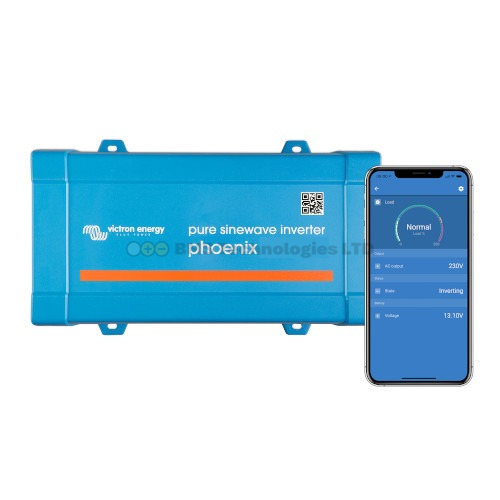
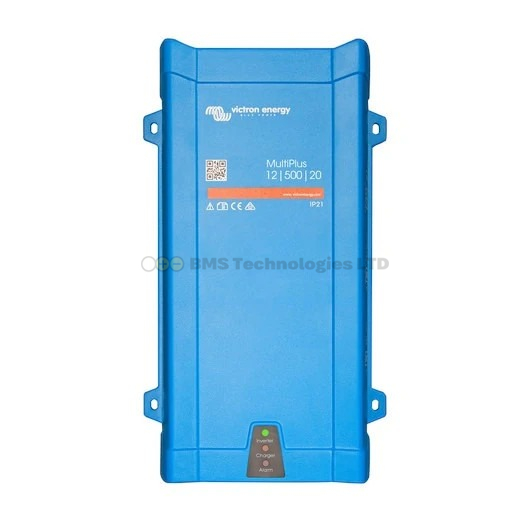
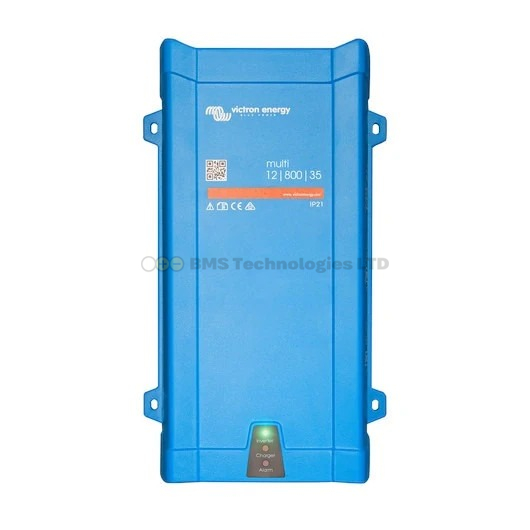
With a Victron MultiPlus, this is seamless. Shore power flows through the transfer switch to your AC sockets. Plug in a fan heater, set it to the appropriate level, and you have warm, quiet, fume-free heating all night. Just be mindful of the total power draw — if your charger is also running, you need to stay within the campsite's current limit.
The Numbers: Side-by-Side Comparison
| Factor | Diesel Heater (12V) | Electric Heater (Battery) | Electric Heater (Shore Power) |
|---|---|---|---|
| 6-hour heat cost | ~£1.05 diesel + 15Ah | 550Ah (impossible) | ~£2.50 electricity |
| Battery drain per night | 15–25Ah | 275–550Ah | 0Ah |
| Works off-grid | Yes (indefinitely) | No (minutes only) | No (requires hookup) |
| Installation complexity | High | None | None |
| Noise level | Moderate (fan hum) | Low (fan whir) | Low (fan whir) |
| Fumes | External exhaust | None | None |
| Initial cost | £100–£1,500 | £15–£40 | £15–£40 |
| Inverter required | No | Yes (2,000VA+) | No (shore power direct) |
The Hybrid Approach (Recommended)
The smartest strategy for year-round campervan heating combines both methods:
Off-Grid Nights: Diesel Heater
When wild camping, at aires, or anywhere without hookup, use the diesel heater. It's the only practical option for sustained heating without mains electricity. The 15–25Ah overnight drain is easily managed by a 200Ah lithium system with solar or alternator charging during the day.
On Hookup: Electric Fan Heater
When plugged into a campsite, switch to an electric fan heater. No diesel fumes, no combustion noise, and the diesel heater gets a rest (which helps longevity and reduces soot buildup). The shore power handles the load, and your batteries charge simultaneously.
Shoulder Seasons: Heated Blanket
For mild autumn and spring nights where full heating is unnecessary, a 12V heated blanket draws only 40–60W (3.3–5Ah per hour). Running one for 8 hours uses 26–40Ah — far less than a diesel heater. This is a genuine option for extending your season without installing a heater, or supplementing a heater on mildly cool nights.
Impact on Your Victron System
Diesel Heater Considerations
Add the heater to your daily power usage calculation. In winter, the heater might consume 200–400Wh per day (17–33Ah), which is a significant portion of a smaller battery system. Factor this in when sizing your battery and solar — winter already has minimal solar production, and the heater adds substantial demand.
Electric Heater on Shore Power Considerations
If using a MultiPlus with PowerControl, set the input current limit to match your hookup. On a 16A UK hookup, you have 3,680W to share between the heater, charger, and any other AC appliances. A 1,500W heater plus a 70A (840W) charger draws 2,340W — well within the 16A limit. On weaker European hookups (6–10A), you may need to reduce the heater output or temporarily pause charging.
Summary
For off-grid campervan heating, a diesel heater is the only practical choice. Electric heating from batteries is physically impractical — the energy numbers simply don't work. However, when on shore power, an electric fan heater is clean, quiet, and free of combustion fumes. The ideal setup is a diesel heater for off-grid use with an electric heater available for hookup nights. Budget for the diesel heater as part of your conversion, and factor its power draw into your system sizing.