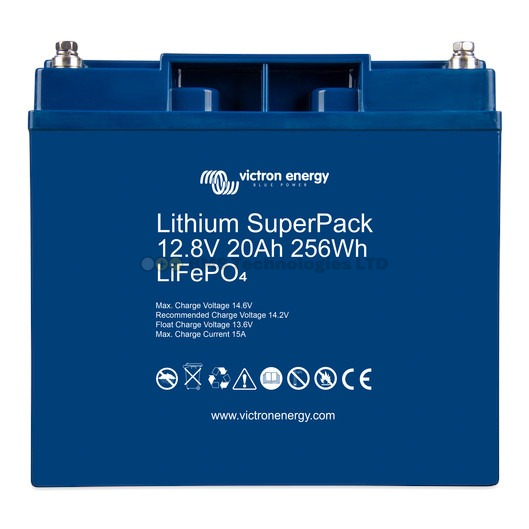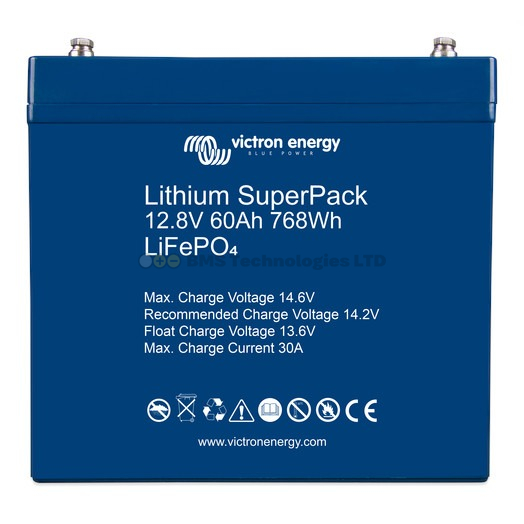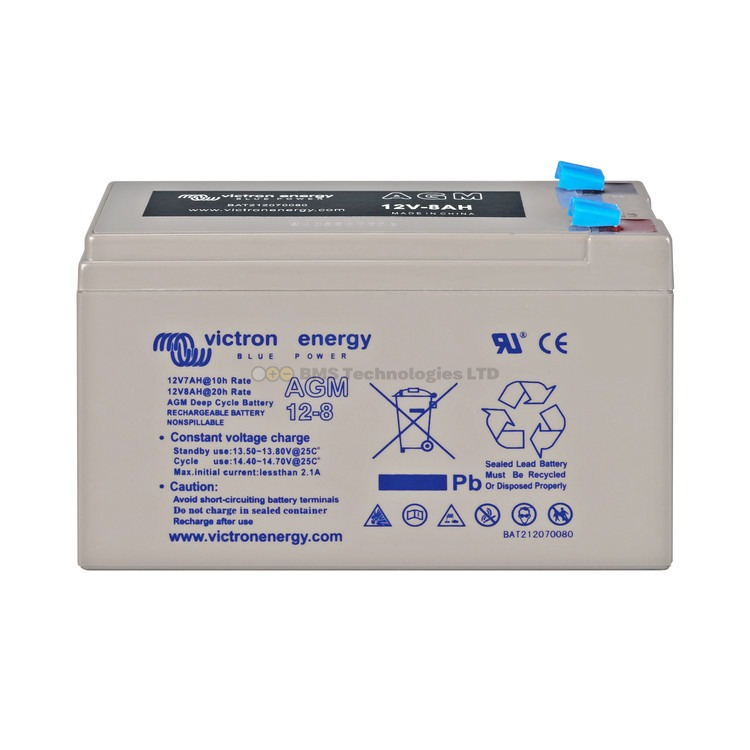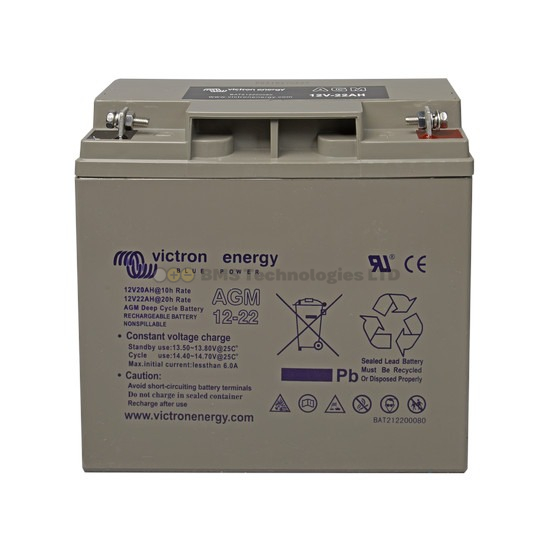
Victron Energy manufactures batteries in all three major chemistries — Lithium Smart (LiFePO4), AGM Deep Cycle, and Gel Deep Cycle. Each technology serves a different purpose, and choosing the right one affects your system’s performance, lifespan, and total cost of ownership. Whether you’re building an off-grid solar setup, upgrading a motorhome leisure battery bank, or designing a marine power system, understanding these differences is essential. This guide breaks down the real-world specifications, pricing, and lifetime economics so you can pick the battery chemistry that fits your budget, application, and energy goals.
Quick Answer
Lithium Smart is the best choice for maximum performance and long-term value. It delivers the most usable energy per kilogram, lasts five to six times longer than lead-acid, and costs far less per kWh over its lifetime. AGM Deep Cycle is ideal for budget builds and small, simple systems where upfront cost matters most and daily cycling is not required. Gel Deep Cycle sits in between — choose it for moderate-use systems, extreme-temperature environments, or installations that may sit idle for extended periods between charge cycles.
Key Differences at a Glance
| Specification | Lithium Smart (LiFePO4) | AGM Deep Cycle | Gel Deep Cycle |
|---|---|---|---|
| Chemistry | LiFePO4 | Lead-acid AGM | Lead-acid Gel |
| Cycle life (50% DoD) | 2500+ | 400–500 | 500–750 |
| Usable capacity | 80–100% | 50% | 50% |
| Weight (100Ah 12V) | ~12 kg | ~30 kg | ~32 kg |
| Self-discharge | <2% per month | 3–5% per month | 3–5% per month |
| Charge efficiency | ~99% | ~85% | ~80% |
| Temperature range | -20 to +50°C | -20 to +50°C | -20 to +50°C (better in extreme heat) |
| Built-in BMS | Yes (Smart) | No | No |
| Bluetooth monitoring | Yes (Smart) | No | No |
| Price (100–110Ah 12V) | from ~£338 (100Ah) | from ~£254 (110Ah) | from ~£159 (110Ah) |
Lithium Smart Advantages
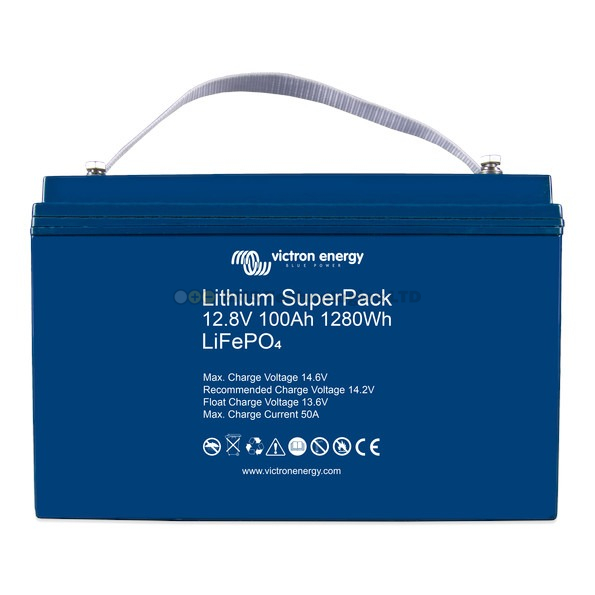
Victron’s Lithium Smart range uses LiFePO4 chemistry — the safest and most stable lithium technology available today. Every battery includes a built-in Battery Management System (BMS) that actively protects against over-charge, over-discharge, over-current, short circuits, and extreme temperatures. Bluetooth connectivity lets you monitor state of charge, voltage, current, and temperature in real time through the free VictronConnect app on your smartphone or tablet.
- 2500+ cycle life at 50% depth of discharge — five to six times longer than AGM, meaning fewer replacements and lower long-term costs
- 80–100% usable capacity versus just 50% for lead-acid, so a 100Ah lithium battery delivers as much energy as a 200Ah AGM
- Fast charging — accepts high charge currents without damage, fully recharging in a fraction of the time required by lead-acid
- Lightweight — roughly 60% lighter than an equivalent lead-acid battery, a critical advantage for mobile, marine, and rooftop installations
- Flat discharge curve — maintains stable voltage throughout the discharge cycle, providing consistent power to connected equipment right down to the cut-off point
- Integrated smart features — built-in BMS and Bluetooth eliminate the need for external battery monitors in many setups
- Long warranty backed by Victron Energy’s global reputation for quality, reliability, and after-sales support
AGM Deep Cycle Advantages
Victron’s AGM Deep Cycle batteries remain the go-to option when upfront cost is the primary concern. They require no Battery Management System, no special charging profile, and no complex wiring — making them straightforward to install, replace, and maintain in any existing system.
- Lowest upfront cost — AGM 110Ah starts from around £254, making it the most accessible option for smaller projects and tight budgets
- No BMS required — simplifies system design and reduces the total component count and cost
- Completely maintenance-free — sealed construction with no watering, no equalisation charges, and no acid level checks needed
- Ideal for small or simple systems such as alarm panels, gate motors, emergency lighting, and UPS backup
- Handles vibration well — the absorbed glass mat design makes AGM particularly suitable for boats, caravans, and overland vehicles
- No special charger needed — works with any standard lead-acid charger, solar charge controller, or alternator charging setup
- Wide availability — AGM is the most commonly stocked battery type, making replacements easy to source anywhere
Gel Deep Cycle Advantages
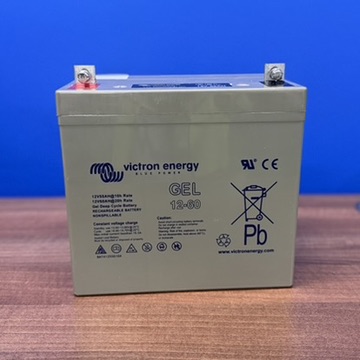
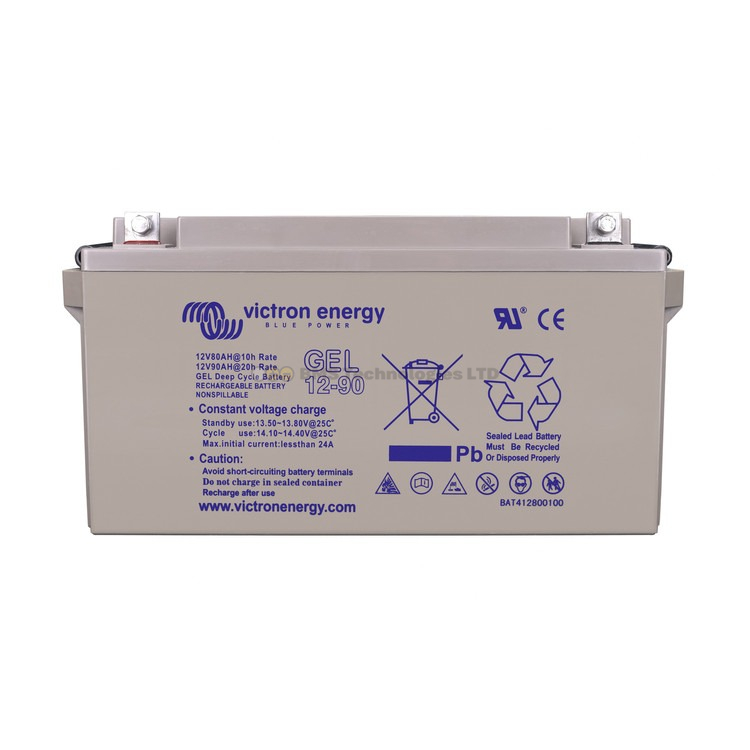
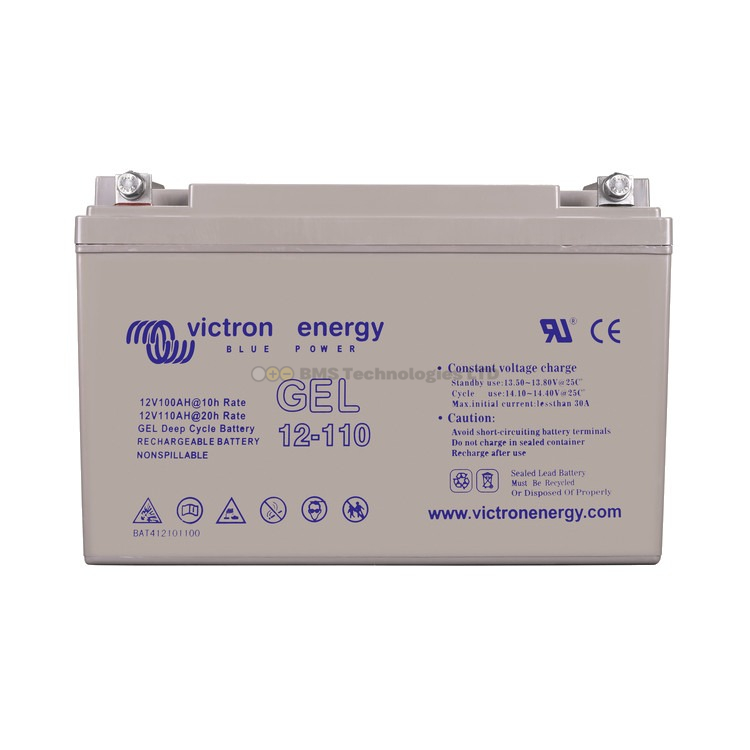
Victron’s Gel Deep Cycle batteries use a gelled electrolyte that provides several distinct advantages over traditional AGM technology in specific use cases. They occupy an excellent middle ground between AGM affordability and lithium longevity, making them a smart choice for systems that need more resilience than AGM can offer.
- Better performance in high temperatures — the gel electrolyte is more thermally stable in sustained heat, reducing degradation in hot climates and enclosed spaces
- Longer cycle life than AGM — typically 500–750 cycles at 50% DoD compared to AGM’s 400–500, extending time between replacements
- Fully sealed and spill-proof — safe to mount in any orientation without risk of electrolyte leakage
- Very low self-discharge — ideal for seasonal systems like holiday caravans and summer cabins that sit idle for weeks or months
- Tolerates deep discharge better than AGM — recovers more gracefully from occasional over-discharge events without permanent capacity loss
- Quiet, gas-free operation — no gassing under normal charge conditions, making Gel suitable for indoor and enclosed installations where ventilation is limited
Cost Comparison by Capacity
The table below shows the price ranges across Victron’s battery lineup so you can compare like-for-like at each capacity tier. Note that Lithium Smart batteries are currently available in 100Ah, 150Ah, and 200Ah sizes, while AGM and Gel cover a broader range of capacities from 60Ah to 220Ah.
| Capacity | Lithium Smart | AGM Deep Cycle | Gel Deep Cycle |
|---|---|---|---|
| 60Ah | — | £124–£165 | £98–£157 |
| 90Ah | — | £177–£202 | £136–£208 |
| 100Ah | £338–£591 | — | — |
| 110Ah | — | £254–£294 | £159–£258 |
| 130Ah | — | £299–£307 | £203–£303 |
| 150Ah | £727–£958 | — | — |
| 165Ah | — | £337–£424 | £262–£389 |
| 200Ah | £782–£1,002 | — | — |
| 220Ah | — | £306–£463 | £368–£477 |
Important: Lithium’s effective cost per usable kWh is dramatically lower than these upfront figures suggest. Each lithium battery delivers 2500+ full cycles versus just 400–500 for AGM. When you also factor in usable capacity (80–100% vs 50%), a single lithium battery provides roughly 6–8 times more total energy over its lifetime than an equivalently-priced lead-acid unit.
Cost Per kWh Delivered Over Lifetime
Upfront price tells only part of the story. The true measure of battery value is the cost per kilowatt-hour delivered over the battery’s entire service life. Here’s how the three chemistries compare using the lowest available prices for similar capacities:
| Metric | Lithium Smart 100Ah | AGM 110Ah | Gel 110Ah |
|---|---|---|---|
| Purchase price | ~£338 | ~£254 | ~£159 |
| Nominal energy (12V) | 1.28 kWh | 1.32 kWh | 1.32 kWh |
| Usable DoD | 80% | 50% | 50% |
| Usable energy per cycle | 1.024 kWh | 0.66 kWh | 0.66 kWh |
| Expected cycles (50% DoD) | 2,500 | 450 | 600 |
| Lifetime energy delivered | 2,560 kWh | 297 kWh | 396 kWh |
| Cost per kWh | ~£0.13 | ~£0.85 | ~£0.40 |
Despite having the highest upfront price, Lithium Smart is by far the cheapest per kWh delivered — roughly 6.5 times cheaper than AGM and 3 times cheaper than Gel over the battery’s lifetime. For any system that will be cycled daily or near-daily, lithium typically pays for itself within two to three years compared to replacing lead-acid batteries repeatedly.
Which Battery Should You Choose?
Choose Lithium Smart if…
- You need daily cycling for off-grid solar, motorhome, or liveaboard boat systems
- Weight is a concern in mobile, marine, or rooftop installations
- You want the lowest long-term cost per kWh delivered
- You need fast charging from solar panels, shore power, or an alternator
- You want built-in BMS protection and Bluetooth monitoring without extra components
- You’re building a system you want to last 10+ years without battery replacements
- You’re integrating with a Victron GX device, MultiPlus, or other Victron ecosystem components
Choose AGM Deep Cycle if…
- Upfront budget is your primary constraint and you need to keep initial costs as low as possible
- The system is small and simple — backup power, alarm, security, or emergency lighting
- You want a drop-in replacement with no special charger or BMS requirements
- The battery will be cycled infrequently, such as in a weekend caravan or seasonal holiday cabin
- You need a robust battery that handles vibration and shock in a vehicle or boat engine room
- You’re replacing an existing lead-acid battery and want maximum compatibility
Choose Gel Deep Cycle if…
- The installation is in a high-temperature environment where thermal stability matters
- The system will sit idle for extended periods between use and you need minimal self-discharge
- You need better deep-discharge tolerance than AGM provides, but on a lead-acid budget
- The battery bank is indoors or in an enclosed space and you need zero-gassing operation
- You want a longer cycle life than AGM without stepping up to lithium pricing
- Your application involves moderate, regular cycling rather than heavy daily use
The Bottom Line
For most off-grid, solar, and mobile applications, Victron Lithium Smart batteries are the clear winner on performance, weight, and lifetime value. The upfront premium pays for itself many times over through 2500+ cycles, 80–100% usable capacity, built-in BMS protection, and Bluetooth monitoring. At just £0.13 per kWh delivered, no other chemistry comes close on total cost of ownership.
If your budget doesn’t stretch to lithium right now, Gel Deep Cycle offers the best value among lead-acid options — at roughly £0.40 per kWh delivered, it’s less than half the per-kWh cost of AGM and provides meaningfully longer cycle life. Reserve AGM Deep Cycle for simple, low-cycle applications where the lowest possible purchase price is what matters most.
Whichever chemistry you choose, Victron Energy’s engineering quality and global support network ensure you’re getting a reliable, well-built battery backed by one of the most trusted names in energy systems. Browse our full range of Victron batteries to find the right fit for your system.