Victron's Energy Storage System (ESS) lets UK homeowners store solar energy in batteries and use it when electricity is most expensive — in the evening and during peak tariff periods. With UK electricity prices among the highest in Europe and feed-in rates relatively low, self-consumption of solar power makes strong financial sense. This guide explains how ESS works, what equipment you need, UK-specific regulations, and whether the numbers add up for a typical British home.
What Is Victron ESS?
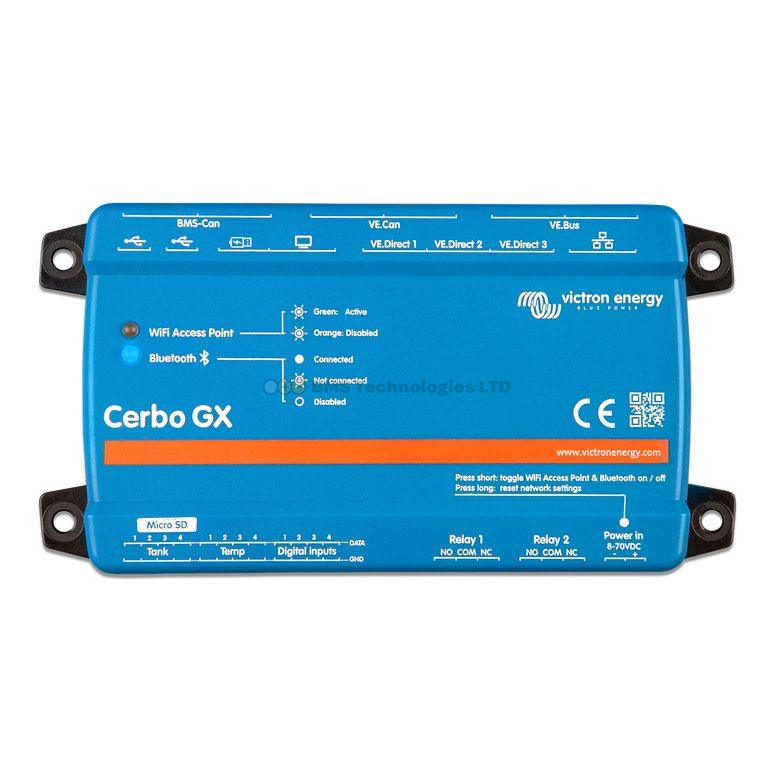
ESS (Energy Storage System) is a software mode that runs on Victron's GX devices (like the Cerbo GX). It coordinates a MultiPlus-II inverter/charger, a battery bank, and a grid energy meter to intelligently manage energy flow in a grid-connected home.
In simple terms, ESS does three things:
- Stores excess solar energy — when your solar panels produce more than you're using, the surplus charges the batteries instead of being exported to the grid at a low rate
- Powers your home from batteries — in the evening when solar production drops, the inverter draws from the batteries to reduce grid imports
- Optimises grid interaction — you can configure it to export surplus once batteries are full, or to charge from cheap overnight grid tariffs for use during expensive peak periods
Required Equipment
Core Components
| Component | Role | Recommended Models |
|---|---|---|
| Inverter/Charger | Converts DC battery power to AC, charges batteries from grid or solar | MultiPlus-II 48/3000/35 or MultiPlus-II 48/5000/70 |
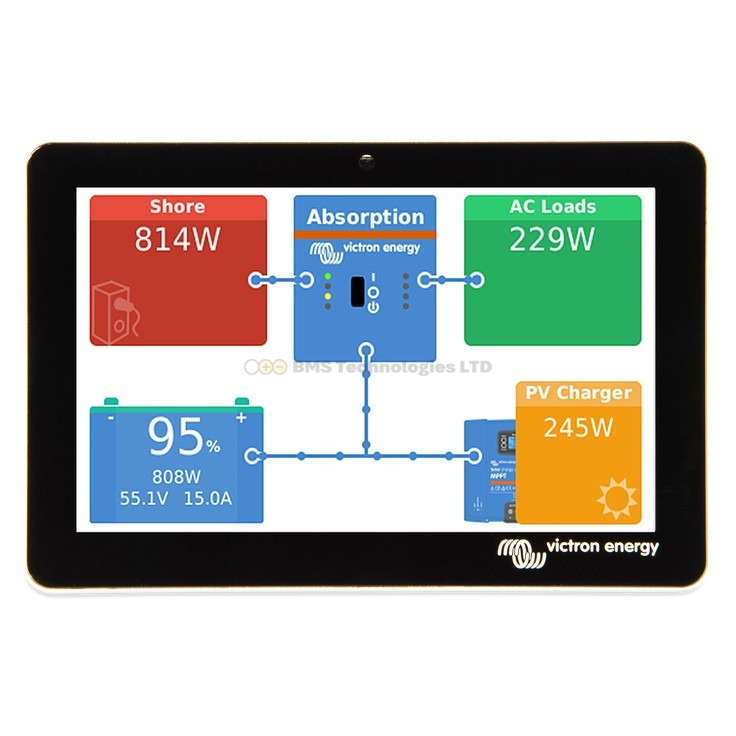
| GX Device | System brain — runs ESS software, monitors everything | Cerbo GX + GX Touch 50 |
| Battery Bank | Stores energy (typically 5-15kWh for a UK home) | Victron Lithium Smart or compatible (Pylontech, BYD) |
| Grid Energy Meter | Measures power flowing to/from the grid | Victron Energy Meter ET112 (single phase) or ET340 (three phase) |
| Solar Panels + MPPT | Generates power from sunlight | Victron SmartSolar MPPT 250/100 (or similar, sized for array) |
Why the MultiPlus-II?
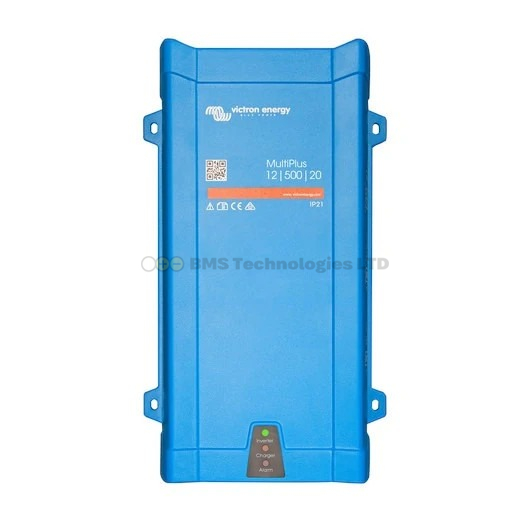
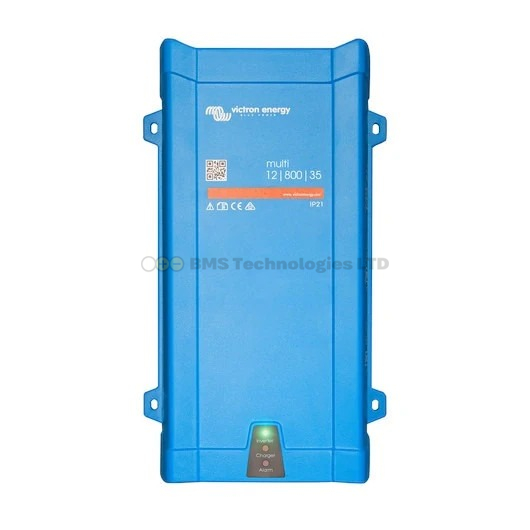
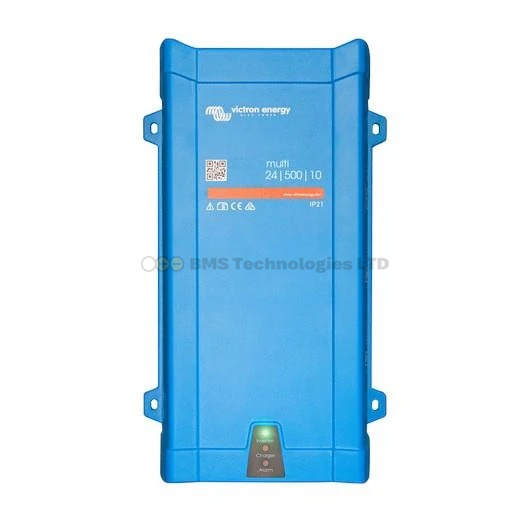
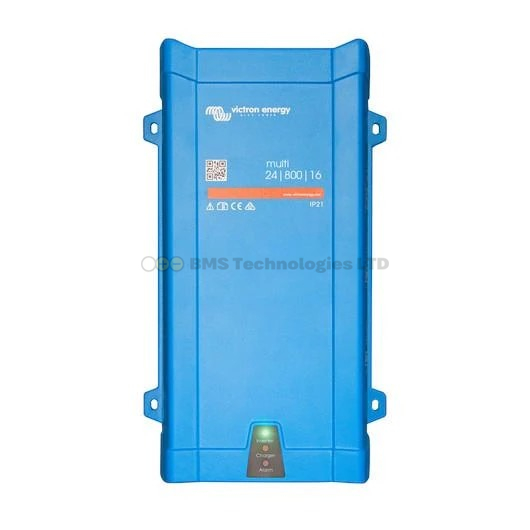
ESS requires a MultiPlus-II (not the original MultiPlus). The MultiPlus-II includes built-in grid code compliance — specifically, it can be configured for the UK G98 and G99 grid codes required by UK Distribution Network Operators (DNOs). The original MultiPlus lacks this certification for grid-connected operation in the UK.
48V System Voltage
For home ESS, 48V is the standard. Higher voltage means lower currents, thinner cables, and higher efficiency for the power levels involved (3-10kW). Victron's ESS-capable MultiPlus-II models are available in 24V and 48V, but 48V is the practical choice for any system over 3kW.
How ESS Works in a UK Home
Daytime: Solar Generation
During the day, your solar panels generate power. The MPPT charge controller converts this to DC and charges the batteries. Simultaneously, the MultiPlus-II converts battery DC to 230V AC and feeds your home's circuits. If solar production exceeds your household demand plus battery charging, the surplus is exported to the grid.
Evening: Battery Discharge
When solar production drops (late afternoon through the night), the MultiPlus-II draws power from the batteries to supply your home. The grid energy meter tells the GX device exactly how much power your home is consuming at any moment, and the MultiPlus-II adjusts its output to match — a process called zero feed-in or grid setpoint. The aim is to import zero watts from the grid while running entirely on battery power.
Overnight: Optional Grid Charging
If you're on a time-of-use tariff like Octopus Go, Octopus Flux, or Economy 7, you can configure ESS to charge the batteries from the grid during cheap overnight periods (typically 00:30-04:30 at around 7-12p/kWh) and discharge during expensive peak periods (typically 30-40p/kWh). This tariff arbitrage generates savings even on days when solar production is low — which in a British winter is most days.
UK Grid Code Compliance
G98 and G99
Any system that exports power to the UK grid must comply with the Engineering Recommendation G98 (for installations under 16A per phase, roughly under 3.68kW single phase) or G99 (for larger installations). The Victron MultiPlus-II has built-in G98/G99 country settings that handle frequency response, voltage limits, and anti-islanding protection automatically.
DNO Notification
Under G98, you must notify your Distribution Network Operator (DNO) of the installation. This is a notification, not an application for permission — the DNO cannot refuse a G98-compliant installation under 3.68kW. Your installer should submit the notification via the ENA application portal.
For systems over 3.68kW (falling under G99), you need DNO approval before installation. The application process takes 4-8 weeks typically. Larger systems may require a grid capacity assessment.
MCS Certification
For the installation to qualify for Smart Export Guarantee (SEG) payments (money paid to you for exporting surplus to the grid), the solar installation must be done by an MCS-certified installer and the equipment must be MCS-listed. The Victron MultiPlus-II is not MCS-listed as an inverter, which means the MPPT/solar side needs an MCS-listed component in the chain, or the solar panels connect to the AC side via a separate MCS-listed solar inverter.
A common configuration is AC-coupled solar: a standard MCS-listed solar inverter (Solis, SolarEdge, Enphase, etc.) connects to the AC side, and the Victron ESS manages the battery storage. This keeps the solar element MCS-compliant for SEG eligibility while letting Victron handle the storage and grid management.
System Sizing for a Typical UK Home
Average UK Electricity Consumption
The average UK household uses approximately 3,500-4,000 kWh per year, or roughly 10-11 kWh per day. Daily consumption varies hugely: a winter day with electric heating might use 20kWh+, while a summer day might use 6-8kWh.
Solar Array Sizing
In the UK, a solar panel generates roughly 800-900 kWh per kWp per year (varying by location and orientation). For a typical home targeting significant self-consumption:
- 3-4kWp system — generates ~2,700-3,600 kWh/year. Covers the majority of summer demand, useful contribution in winter
- 5-6kWp system — generates ~4,000-5,400 kWh/year. May produce more than you use annually. Requires more roof space
A south-facing roof at ~35 degrees pitch is ideal. East-west split roofs work well with Victron ESS because the morning and evening generation spreads production across the day, better matching consumption patterns.
Battery Bank Sizing
The battery needs to store enough energy to cover the gap between solar production ending (late afternoon) and the next morning — or between cheap overnight charging and expensive peak periods.
- 5kWh battery — covers a modest evening's use (4-5 hours at 1kW average). Suits smaller households or those with cheap overnight tariffs to top up
- 10kWh battery — covers a full evening and night for most households. The sweet spot for cost-effectiveness
- 15kWh+ battery — covers nearly a full day's consumption, maximises self-consumption even in autumn/spring. Higher cost with diminishing returns
Inverter Sizing
The MultiPlus-II must handle your peak household demand. Most UK homes have a main fuse of 60A or 100A, but typical demand rarely exceeds 3-4kW sustained. A MultiPlus-II 48/5000/70 handles 5kVA — enough for a kettle (3kW) running alongside normal background loads. For larger homes or those with electric vehicle chargers, consider paralleling two units.
Cost-Benefit Analysis (2024-2025 UK Prices)
Typical System Costs
| Component | Approximate Cost (inc VAT) |
|---|---|
| MultiPlus-II 48/5000/70 | £1,400-1,800 |
| Cerbo GX + GX Touch 50 | £350-450 |
| 10kWh lithium battery bank | £2,500-4,000 |
| Energy meter (ET112/ET340) | £100-200 |
| SmartSolar MPPT controller | £200-500 |
| Cabling, fuses, enclosure | £300-500 |
| Professional installation | £1,000-2,000 |
| Total (battery + inverter only, no solar) | £5,000-9,000 |
Note: Solar panels are a separate cost (typically £4,000-8,000 for a 4-6kWp installed system). VAT on residential battery storage installations in the UK is currently 0% (reduced from 20% to encourage uptake).
Annual Savings
Savings depend on your tariff, consumption pattern, and solar generation. Conservative estimates:
- Solar self-consumption (avoiding grid import): Using 3,000kWh of solar directly instead of importing at 30p/kWh = £900/year saved
- Tariff arbitrage (no solar): Charging 10kWh at 7p/kWh overnight and using at 30p/kWh peak = £0.23/kWh margin x 10kWh x 300 days = £690/year
- Combined solar + tariff arbitrage: £800-1,200/year is realistic for a well-configured system
Payback Period
At current UK electricity prices, a battery-only ESS system (no solar) typically pays back in 7-10 years. Combined with solar, the payback drops to 5-8 years. Battery lifespan is typically 10-15 years for lithium, making the economics favourable at current energy prices. If electricity prices continue rising, payback accelerates further.
Installation and Commissioning
Professional Installation Required
A grid-connected ESS system must be installed by a qualified electrician — ideally one experienced with Victron equipment. The installation involves mains-voltage AC work, grid connections, and DNO compliance. This is not a DIY project.
Commissioning Steps
- Install and wire all hardware (MultiPlus-II, batteries, GX device, energy meter)
- Configure the MultiPlus-II for UK G98/G99 grid code using VEConfigure software
- Enable ESS mode on the Cerbo GX
- Set battery minimum state of charge (typically 10-20%)
- Configure scheduled charging if using time-of-use tariffs
- Verify grid meter readings match actual import/export
- Register on VRM (Victron Remote Management) for monitoring
For more on the Victron GX devices that control ESS, read our Cerbo GX guide. For understanding inverter specifications, see our inverter ratings guide. And for the solar MPPT controller side, our MPPT charge controller guide covers sizing and configuration. You can also use our system builder tool to design a complete Victron ESS system with product recommendations and pricing.