Garden offices, workshops, and studio spaces have become enormously popular in the UK since 2020. The question of how to power them comes down to two choices: run a cable from the house or install a standalone solar and battery system. A Victron-based setup can make your garden building energy-independent, and in many cases it works out cheaper than a professional mains extension. This guide covers the practical details.
Typical Power Requirements for a Garden Office
Before choosing any equipment, you need a realistic picture of what your garden building actually consumes. Here are typical loads for common garden office setups:
| Appliance | Watts | Hours/Day | Wh/Day |
|---|---|---|---|
| Desktop PC or laptop | 60-150 | 8 | 480-1,200 |
| 27" monitor | 30-50 | 8 | 240-400 |
| LED lighting (4 bulbs) | 40 | 6 | 240 |
| WiFi router/mesh extender | 12 | 24 | 288 |
| Phone/tablet charging | 15 | 2 | 30 |
| Small fan heater (occasional) | 1,000-2,000 | 1-3 | 1,000-6,000 |
| Kettle | 2,000-3,000 | 0.1 (3 cups) | 200-300 |
| Small fridge | 40 | 8 (compressor cycles) | 320 |
| Laser printer (standby + prints) | 10-500 | 0.5 | 50-100 |
The Heating Problem
Heating is by far the largest energy consumer. A 2 kW fan heater running for 3 hours uses 6,000 Wh — more than everything else combined for a week. For a solar-powered garden office, electric resistance heating is not practical. Instead, consider:
- Proper insulation — 100mm insulated walls, double or triple glazed windows, and an insulated floor dramatically reduce heating needs
- Small oil-filled radiator (400-600W) on a thermostat — uses a fraction of a fan heater
- LPG or propane heater — a portable Calor gas heater provides heat without any electrical draw. Ensure ventilation
- Mini split air-conditioning unit — a 2.5 kW heat pump draws only 700-800W to produce 2.5 kW of heat. Much more efficient than resistance heating, but requires professional installation and adds cost
If you exclude high-draw heating, a typical garden office consumes 1,200-2,500 Wh per day.
Option 1: Running a Cable from the House
The traditional approach is to extend your household supply to the garden building. In the UK, this typically means:
- SWA cable (Steel Wire Armoured) buried at minimum 450mm depth under paths/patios, or 750mm under cultivated soil (BS 7671 requirements)
- A separate consumer unit in the garden building with RCD protection
- Professional installation by a Part P-certified electrician
- Building regulations notification — electrical work in outbuildings must comply with Part P and may require notification
Cost for a professional SWA installation to a garden building 15-20 metres from the house is typically £1,500-3,000, depending on the route, ground conditions, and whether you need to cross a patio or driveway.
Pros of Mains Extension
- Unlimited power — run anything including heaters and kettles without thinking about it
- No ongoing maintenance
- Simple and proven
Cons of Mains Extension
- Trenching disrupts your garden
- Adds to your household electricity bill
- Fixed installation — moving the building means redoing the cable
- Planning considerations if the trench route crosses shared boundaries
Option 2: Standalone Victron Solar System
A self-contained solar and battery system eliminates the need for any cable from the house. The garden building generates and stores its own power.
Basic System Components
- Solar panels — mounted on the garden building roof or a ground frame. 2-4 panels (800W-1,600W) is typical
- Victron SmartSolar MPPT controller — converts panel output to battery charging current. A 100/30 or 100/50 covers most garden office arrays
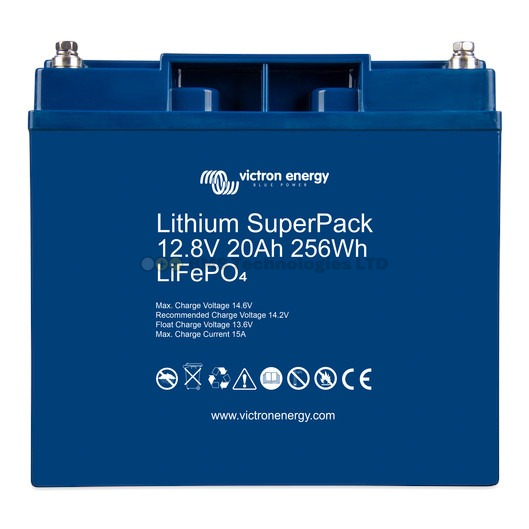
- Battery bank — LiFePO4 for best performance. A single Victron 25.6V/100Ah Smart (2.56 kWh) or 25.6V/200Ah Smart (5.12 kWh) depending on consumption
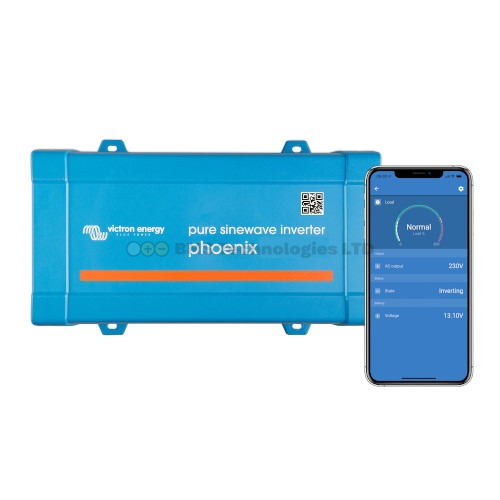
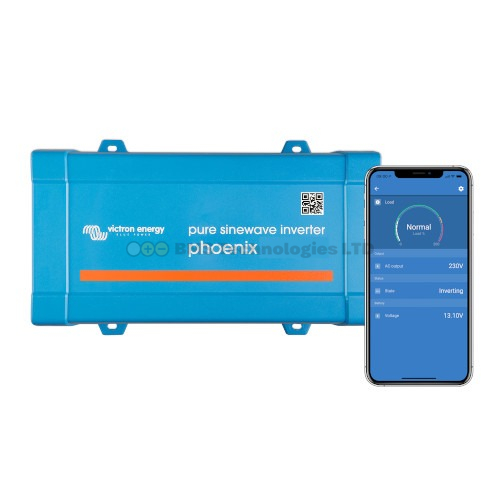
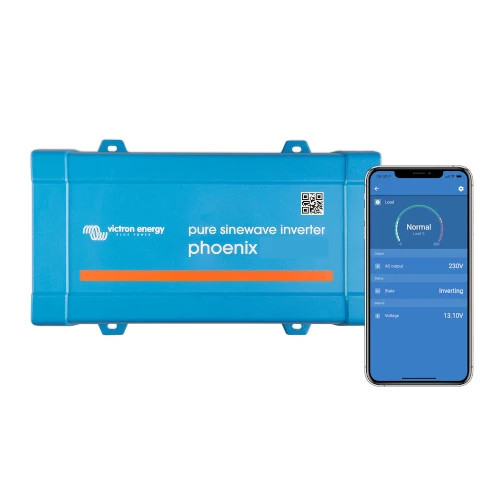
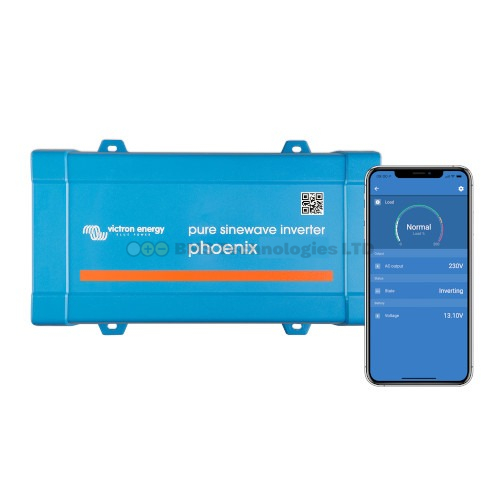
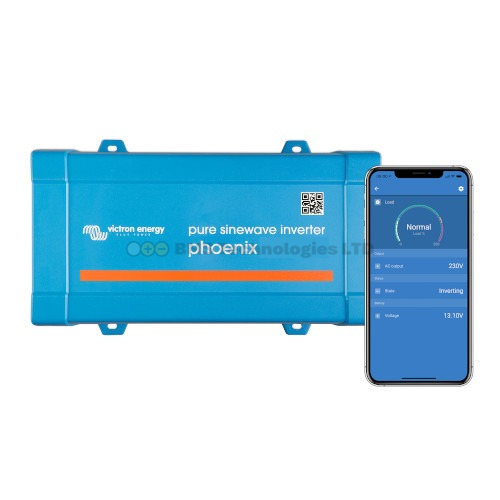
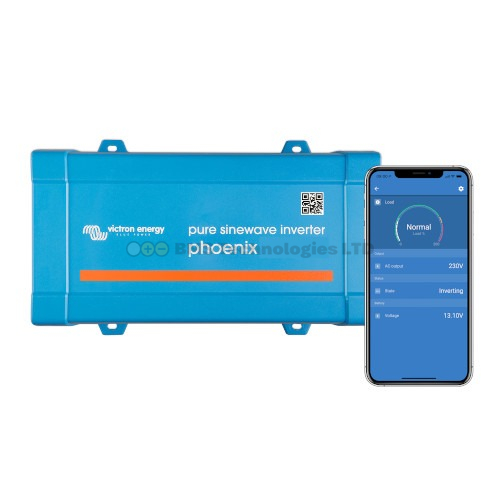
- Victron inverter — converts battery DC to 230V AC. A Phoenix Inverter 24/1200 or MultiPlus 24/1600 handles garden office loads comfortably
- Wiring, fuses, and distribution — a small consumer unit with MCBs for each circuit
System Sizing Example: Standard Garden Office
For a garden office consuming 2,000 Wh/day (no electric heating), located in central England:
| Component | Specification | Approx. Cost |
|---|---|---|
| Solar panels | 3 x 400W monocrystalline | £350-500 |
| MPPT controller | Victron SmartSolar MPPT 100/30 | £140-180 |
| Battery | Victron Smart LiFePO4 25.6V/200Ah | £2,000-2,800 |
| Inverter | Victron Phoenix 24/1200 | £280-380 |
| Battery monitor | Victron SmartShunt 500A | £60-80 |
| Wiring, fuses, consumer unit | Various | £150-250 |
| Mounting hardware | Roof brackets and rails | £100-200 |
| Total | £3,080-4,390 |
This is comparable to or slightly more than a mains SWA extension, but with the significant benefit of zero ongoing electricity costs from the garden building. Over 5-10 years, the solar system pays for itself through electricity savings.
Winter Considerations
UK winter solar output drops dramatically. A 1,200W array in December might produce only 400-600 Wh per day — well short of a 2,000 Wh daily requirement. Options include:
- Reduce winter consumption — use a laptop instead of a desktop, reduce lighting hours, skip the kettle
- Oversize the battery — a larger battery stores more energy from good days to carry through overcast days
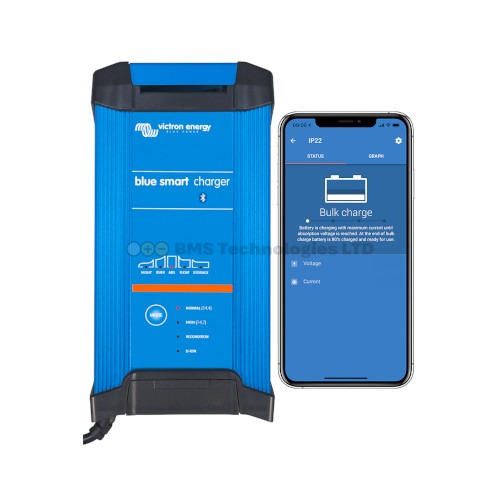
- Add a small grid charger — run a standard extension lead from the house to a small battery charger for winter top-ups. This is not a permanent mains extension — just a temporary boost cable. A Victron IP22 charger works perfectly for this
- Accept seasonal limitations — if you only use the garden office in spring through autumn, winter output is irrelevant
Option 3: Grid-Tied Garden Office
If you do run a mains cable to the garden building, you can still add Victron solar to reduce what the building draws from the house supply. This hybrid approach uses a Victron MultiPlus connected to both the mains supply and a battery bank:
- Solar charges the battery during the day
- The battery powers the garden office when solar is insufficient
- The mains supply takes over only when the battery is depleted
- In summer, the garden building may use zero mains power for weeks at a time
This is the belt-and-braces approach — you always have mains as backup, but your solar system handles the bulk of the load. It also means you can run a heater or kettle from the mains supply while keeping electronics on battery/solar.
UK Building Regulations for Garden Buildings
Garden buildings (offices, workshops, studios) in the UK are generally treated as outbuildings under planning and building regulations:
- Planning permission — most garden buildings under 15m² do not need planning permission if they meet height and boundary distance requirements (Permitted Development rights). Check your local council's guidelines, especially in conservation areas
- Building regulations — a garden office used as a workspace may need to comply with building regulations for thermal insulation, ventilation, and electrical safety. Any fixed electrical installation must comply with BS 7671 and Part P
- Solar panels — solar panels on a garden building are generally permitted development in England, subject to certain height and area limits. In Scotland, Wales, and Northern Ireland, rules differ slightly
- Battery storage — there are no specific UK building regulations for domestic battery storage in outbuildings, but follow manufacturer installation guidelines and ensure adequate ventilation, particularly for lithium batteries
Workshop and Power Tool Considerations
If your garden building is a workshop rather than an office, power requirements change significantly. Power tools draw much more than computer equipment:
| Tool | Typical Wattage | Notes |
|---|---|---|
| Circular saw | 1,200-1,800 | High startup surge |
| Table saw | 1,500-2,500 | Sustained heavy load |
| Router | 1,000-2,000 | Variable depending on cut |
| Drill press | 400-800 | Moderate load |
| Compressor | 1,500-2,500 | Very high startup current |
| Dust extractor | 800-1,200 | Runs alongside main tool |
| Bench grinder | 300-500 | Moderate, consistent |
| Cordless tool chargers | 100-200 | Low, extended periods |
For workshops, the peak load is the critical factor. A table saw and dust extractor running simultaneously draws 2,500-3,700W. This demands a larger inverter — a Victron MultiPlus 24/3000 or 48/3000 minimum. Motor-driven tools also have high startup surges (often 3-5 times running wattage), so check the inverter's surge rating. Victron MultiPlus units handle surges well — the 24/3000 can deliver 6,000W for short bursts.
However, running heavy power tools from a battery system all day is impractical. Most workshop owners with solar use the battery for lighting, chargers, and lighter tools, and plug in heavy equipment via a mains extension or generator when needed.
Monitoring Your Garden Office System
Even without a Cerbo GX, you can monitor a simple garden office system via Bluetooth using the VictronConnect app. This shows:
- Solar yield (from the MPPT controller)
- Battery state of charge (from the SmartShunt)
- Inverter output and status
- Historical data for the past 30 days
For remote monitoring (checking your garden office battery from inside the house), add a Victron VE.Direct Bluetooth dongle to each component, or invest in a Cerbo GX for full VRM cloud access.
Cost Comparison: Solar vs Mains Over 10 Years
| Mains SWA Extension | Victron Solar System | |
|---|---|---|
| Initial cost | £2,000 (installation) | £3,500 (equipment + self-install) |
| Annual electricity cost | £200-350/year (2,000 Wh/day at 28p/kWh) | £0 (summer) to £30 (winter top-up) |
| 10-year electricity | £2,000-3,500 | £0-300 |
| Battery replacement (year 10) | N/A | £1,500-2,500 |
| 10-year total | £4,000-5,500 | £5,000-6,300 |
Over 10 years, the costs are broadly similar. The solar system costs slightly more upfront but avoids ongoing electricity charges. If electricity prices continue rising (as they have consistently in the UK), the solar system becomes increasingly advantageous. If you self-install the solar system, the initial cost drops by £500-1,000, tipping the economics firmly in solar's favour.
Recommended Configurations
Budget Office Setup (Laptop, Lights, WiFi)
- 2 x 200W solar panels
- Victron SmartSolar MPPT 75/15
- Victron LiFePO4 12.8V/200Ah Smart
- Victron Phoenix 12/800
- Daily capacity: ~1,000 Wh
Standard Office (Desktop, Monitor, Lights, Kettle)
- 3 x 400W solar panels
- Victron SmartSolar MPPT 100/30
- Victron LiFePO4 25.6V/200Ah Smart
- Victron MultiPlus 24/1600
- Daily capacity: ~2,500 Wh
Workshop (Power Tools, Compressor, Lighting)
- 4 x 450W solar panels
- Victron SmartSolar MPPT 150/45
- 2 x Victron LiFePO4 25.6V/200Ah Smart
- Victron MultiPlus 48/3000
- Mains backup for heavy tools
- Daily capacity: ~5,000 Wh
For help selecting compatible components and comparing prices across UK retailers, use our system builder tool. If you are new to Victron, our getting started guide explains the ecosystem and how the components work together.