When a boat is plugged into shore power at a marina, the mains earth connection creates an electrical path between the boat's underwater metalwork and every other boat (and the marina infrastructure) connected to the same earth. This shared earth path can cause galvanic corrosion — the gradual destruction of your hull, propeller, keel bolts, and skin fittings by electrochemical action. An isolation transformer breaks this path and protects your boat.
What Is Galvanic Corrosion?
Galvanic corrosion occurs when two dissimilar metals are immersed in an electrolyte (seawater or canal water) and connected by an electrical conductor. One metal becomes the anode (it corrodes) and the other becomes the cathode (it's protected). The shore power earth wire acts as the electrical conductor, connecting your boat's metalwork to every other boat in the marina.
Without protection, your sacrificial anodes (zinc or magnesium) erode rapidly — often in weeks rather than the expected year. In severe cases, hull plating on steel boats can lose measurable thickness in a single season, propeller shafts can pit, and bronze skin fittings can dezincify (become porous and weak).
Why Shore Power Makes It Worse
At anchor or on a mooring without shore power, each boat is electrically isolated. Sacrificial anodes work as designed, slowly corroding to protect the more noble metals. The moment you plug in a shore power cable with an earth conductor, your boat's bonding system connects to the marina earth — and to every other boat on that pontoon. You're now in a galvanic cell with dozens of other vessels, and the boat with the least noble metal loses.
How an Isolation Transformer Works
An isolation transformer sits between the shore power inlet and your boat's AC electrical system. It uses electromagnetic induction — shore power energises the primary winding, which induces voltage in a completely separate secondary winding. There is no direct electrical connection between the marina supply and your boat's AC system.
This means:
- The shore earth conductor does not connect to your boat's earth/bonding system
- There is no galvanic path between your underwater metalwork and other boats
- Your sacrificial anodes work normally, protecting only against natural seawater corrosion
- Stray currents from faulty marina wiring or neighbouring boats cannot reach your hull
Victron Isolation Transformer Range
Victron produces a range of isolation transformers designed specifically for marine use:
| Model | Power Rating | Typical Use |
|---|---|---|
| Isolation Transformer 2000W | 2000W | Small boats, single shore power socket |
| Isolation Transformer 3600W | 3600W | Medium boats, 16A shore power |
| Isolation Transformer 7000W | 7000W | Large boats, 32A shore power |
These are toroidal transformers — compact, efficient, and quiet. They include a Faraday shield between windings for additional EMI filtering. They're designed to be mounted in the bilge or engine compartment and can handle the damp marine environment.
When Do You Need an Isolation Transformer?
Metal-Hulled Boats — Essential
If your boat has a steel, aluminium, or ferro-cement hull, an isolation transformer is not optional. The hull itself is immersed metal connected to the bonding system. Without galvanic isolation, the hull is directly in the galvanic circuit when plugged into shore power. Steel narrowboats and Dutch barges in particular suffer rapid hull pitting without proper protection.
GRP/Fibreglass Boats — Strongly Recommended
Fibreglass boats still have underwater metal: propeller shafts, P-brackets, rudder stocks, keel bolts, skin fittings, and saildrive legs. These are all connected via the bonding system. While the hull isn't at risk, losing a propeller shaft bearing or having a skin fitting fail can sink the boat.
Marinas with Known Earth Leakage Issues
Older UK marinas, particularly on canals and inland waterways, sometimes have poor earthing in their shore power installations. Stray currents in the water can accelerate corrosion dramatically. If other boats in your marina are losing anodes quickly, an isolation transformer provides complete protection.
The Cheaper Alternative: Galvanic Isolator
A galvanic isolator (also called a zinc saver) is a simpler device fitted in the shore power earth conductor. It uses pairs of diodes to block low-voltage galvanic currents (typically under 1.2V) while still allowing the safety earth to function in a fault condition.
Galvanic Isolator vs Isolation Transformer
| Feature | Galvanic Isolator | Isolation Transformer |
|---|---|---|
| Cost | £50-150 | £500-2000+ |
| Installation | Simple — inline with earth conductor | Requires mounting space, cable rerouting |
| Protection level | Blocks DC galvanic currents only | Complete electrical isolation |
| AC fault earth | Maintained (passes AC above ~1.2V) | Isolated — boat has its own independent earth |
| Stray AC current protection | No — only blocks DC | Yes — complete isolation from marina |
| Weight | Under 1kg | 15-45kg depending on rating |
| Suitable for metal hulls | Partial protection only | Full protection — recommended |
For GRP boats in well-maintained UK marinas, a galvanic isolator provides reasonable protection at low cost. For metal-hulled boats, or any boat in a marina with questionable earthing, the isolation transformer is the proper solution.
Installation Considerations
Placement
Isolation transformers are heavy. Mount them low in the boat — in the bilge or on the engine room floor. They must be ventilated as they generate heat under load. Victron's marine models are designed for bilge mounting but should not be submerged.
Integration with Victron MultiPlus
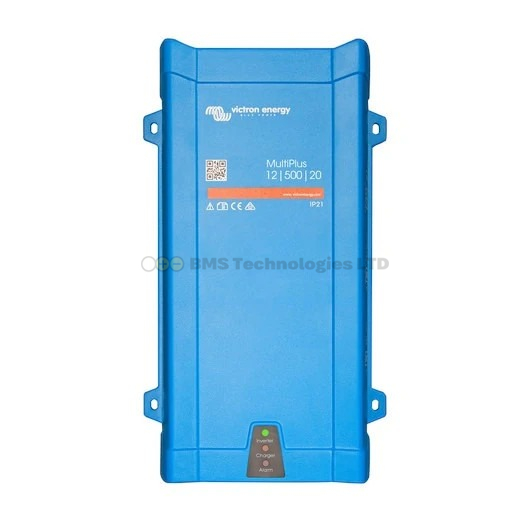
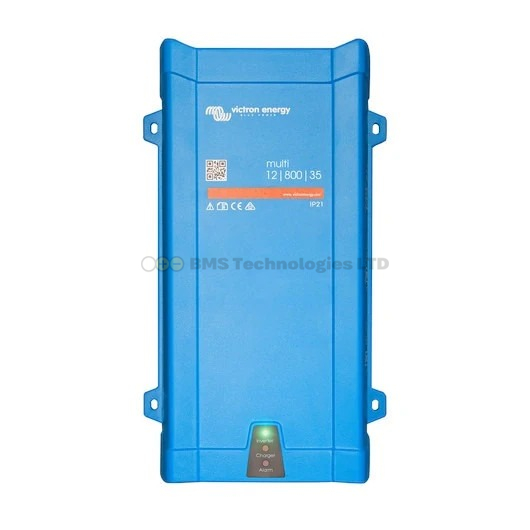
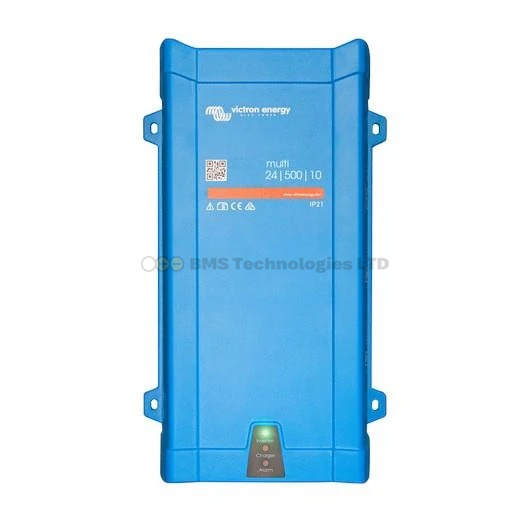
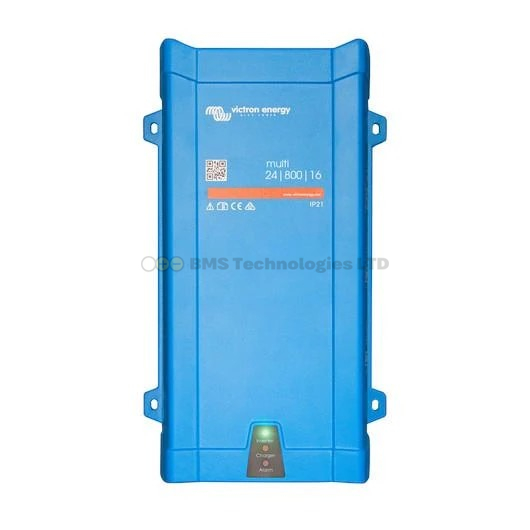
When using an isolation transformer with a Victron MultiPlus, the transformer goes between the shore power inlet and the MultiPlus AC input. The MultiPlus then sees an isolated supply and operates normally. The boat's AC earth is derived from the transformer secondary, not from the marina earth.
Wiring
- Shore power inlet connects to the primary side of the isolation transformer
- The secondary side connects to the MultiPlus AC input (or directly to the boat's AC distribution panel)
- The secondary earth terminal connects to the boat's bonding system
- The primary earth from the shore cable does not connect to the boat's bonding system — it terminates at the transformer
Sizing
Size the isolation transformer to match your shore power supply. A standard UK marina 16A socket delivers a maximum of 3680W (16A x 230V). The Victron 3600W isolation transformer matches this perfectly. If you have a 32A supply, the 7000W model is required.
Do You Still Need Sacrificial Anodes?
Yes. An isolation transformer protects against galvanic corrosion caused by shore power earth connections. It does not protect against natural galvanic corrosion between the boat's own dissimilar metals in seawater. Sacrificial anodes are still essential — but with proper isolation, they last their intended service life rather than disappearing in weeks.
For more on marine electrical systems, see our sailboat installation guide, our narrowboat system guide, and our guide to shore power charging on narrowboats.