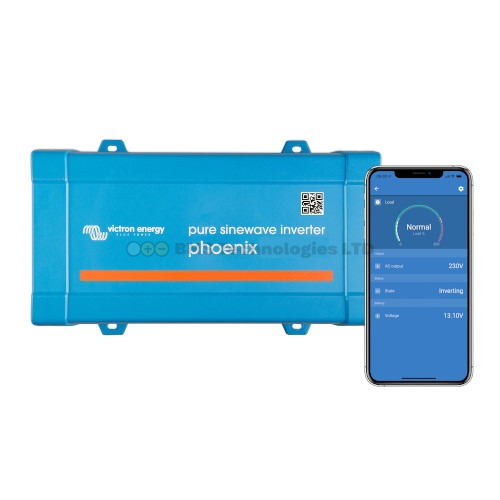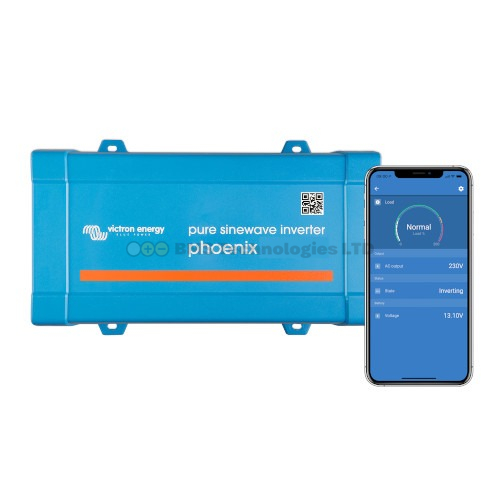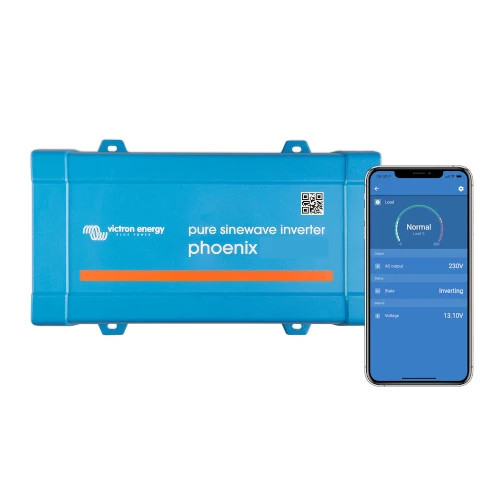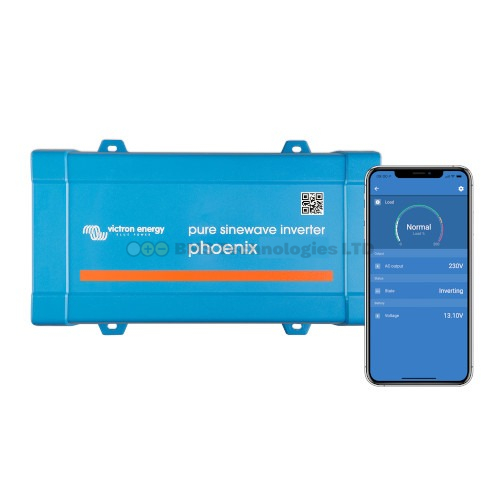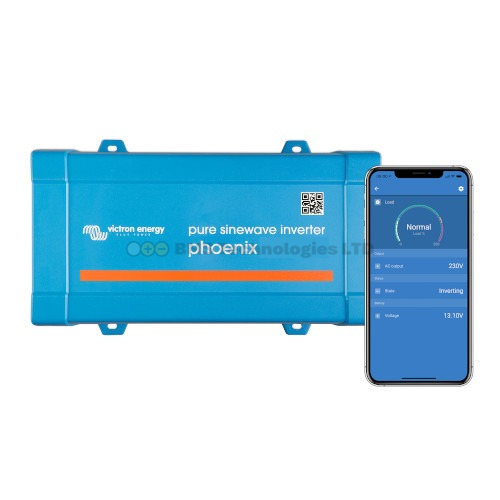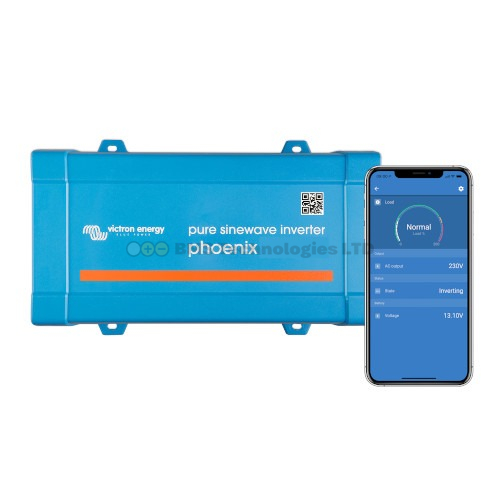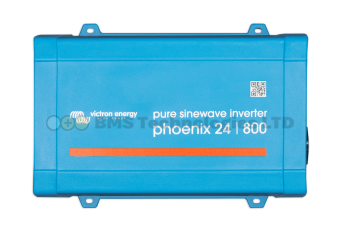
Victron makes two product families that convert battery power to AC mains electricity: the Phoenix Inverter (pure inverter only) and the MultiPlus (inverter plus battery charger plus transfer switch). They serve different needs and budgets. This guide explains when to save money with a Phoenix and when the MultiPlus is essential.
What's the Difference?
A Phoenix Inverter does one job: it converts 12V, 24V, or 48V DC battery power into 230V AC mains electricity. That's it. No charging, no transfer switching.
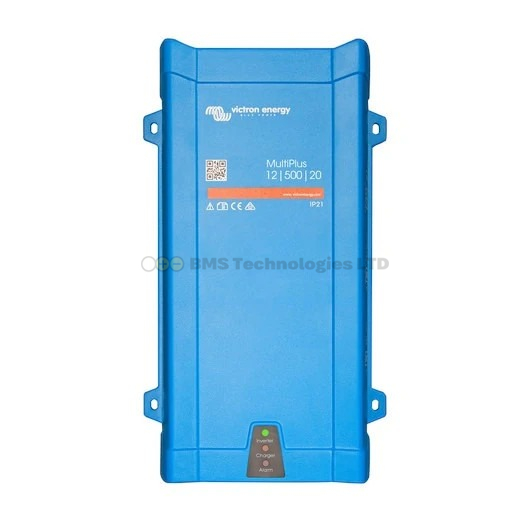
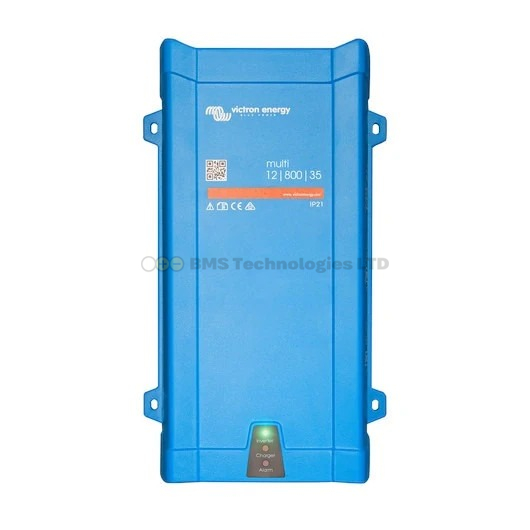
A MultiPlus does three jobs in one box:
- Inverter — converts DC to AC, same as the Phoenix
- Battery charger — charges your batteries from shore power or a generator
- Transfer switch — automatically switches between inverter power and shore/generator power, with no interruption
The MultiPlus also supports PowerAssist (boosting weak shore power with battery power) and can be connected to a GX device for advanced monitoring and control.
Specifications Compared
| Feature | Phoenix Inverter | MultiPlus |
|---|---|---|
| DC to AC inverter | Yes | Yes |
| AC to DC charger | No | Yes |
| Transfer switch | No | Yes (built-in) |
| PowerAssist | No | Yes |
| Size range | 250VA to 5000VA | 500VA to 5000VA |
| System voltages | 12V, 24V, 48V | 12V, 24V, 48V |
| Pure sine wave | Yes | Yes |
| VE.Direct port | Yes (Smart models) | No (VE.Bus) |
| Bluetooth | Yes (Smart models) | No (needs GX device or MK3 adapter) |
| Parallel operation | No | Yes (up to 6 units) |
| Three-phase | No | Yes (3 units) |
| Price range | From ~£100 | From ~£200 |
When to Choose a Phoenix Inverter
The Phoenix is the right choice when you only need to convert battery power to AC and have no need for built-in shore power charging. Common scenarios:
Campervans Without Shore Power
If your van setup charges batteries from solar and alternator only, and you never plug into hookup, a Phoenix inverter is all you need. Add a separate mains charger (like the Victron Blue Smart IP22) if you later decide to add shore power capability.
Small Power Needs
If you only need AC power occasionally — charging a laptop, running a small appliance — a compact Phoenix 250VA or 375VA is cheap, efficient, and tiny. The MultiPlus doesn't come smaller than 500VA.
Budget Builds
A Phoenix 1200VA costs roughly half the price of a MultiPlus 1200VA. If budget is tight and you don't need the charging and transfer switch features, the savings are significant.
Backup Inverter
Some larger systems use a Phoenix as a secondary inverter for non-critical loads, with the MultiPlus handling the main AC circuit and shore power integration.
When to Choose a MultiPlus
The MultiPlus is essential when you need shore power integration, automatic changeover, or PowerAssist:
Boats and Narrowboats
Marine installations almost always need shore power charging when moored. The MultiPlus handles the changeover automatically — when you plug in, it switches from inverter mode to passthrough + charging. Unplug, and it seamlessly switches back to inverter mode. No manual switching, no interruption to your loads.
Motorhomes with Hookup
If you regularly use campsite hookup, the MultiPlus is worth the premium. It charges your batteries from the hookup while simultaneously passing AC through to your sockets. When you disconnect, it smoothly transitions to inverter mode.
Off-Grid Homes and Cabins
Any off-grid installation that also has a generator benefits enormously from the MultiPlus transfer switch. Connect the generator to the AC input, and the MultiPlus automatically uses it to charge batteries and power loads. When the generator stops, it switches back to inverter mode.
PowerAssist Applications
On boats or in motorhomes with limited shore power (a typical UK marina berth offers 16A), PowerAssist lets the MultiPlus supplement shore power with battery power during peak demands. If you're running a kettle that draws 13A and a microwave that draws 7A (total 20A, exceeding the 16A supply), the MultiPlus draws the extra 4A from the battery. This prevents the shore breaker from tripping.
Can You Start with a Phoenix and Upgrade Later?
Yes, but it's not a simple swap. The Phoenix connects via VE.Direct (newer Smart models) while the MultiPlus uses VE.Bus — different cables, different monitoring setup. You'd also need to wire in the AC input and potentially add a GX device.
If there's any chance you'll want shore power integration in the future, buy the MultiPlus now. The price difference is much less than buying a Phoenix now and replacing it with a MultiPlus later.
What About the MultiPlus-II?
The MultiPlus-II is the newer version with grid-code compliance, ESS support, and lower standby consumption. If you're connecting to the mains grid (home battery storage, grid-tied solar), you need the MultiPlus-II. For standalone off-grid use on boats and campervans, the original MultiPlus is fine and often cheaper in smaller sizes.
Quick Decision Guide
| Your Situation | Recommendation |
|---|---|
| Campervan, no hookup ever | Phoenix Inverter |
| Campervan, occasional hookup | MultiPlus |
| Motorhome with regular hookup | MultiPlus |
| Sailing yacht or narrowboat | MultiPlus (essential for shore power) |
| Off-grid cabin with generator | MultiPlus |
| Home battery storage (grid-tied) | MultiPlus-II |
| Tiny power needs only (laptop charger) | Phoenix 250VA or 375VA |
| Budget build, add features later | Phoenix now, but consider MultiPlus if possible |
Summary
The Phoenix Inverter is a simpler, cheaper, inverter-only solution for systems that don't need shore power integration. The MultiPlus adds a built-in charger and transfer switch that make it essential for boats, motorhomes with hookup, and any installation with a generator or mains connection. For most marine and motorhome builds, the MultiPlus pays for itself in convenience and functionality. For campervans without hookup, the Phoenix keeps costs down without compromise.