If you are considering a home battery system in the UK, two names dominate the conversation: Tesla Powerwall and Victron Energy. Both can store solar energy, shift electricity usage to cheaper tariff periods, and provide backup during power cuts. But they take fundamentally different approaches, and the right choice depends on what you need from your system.
Quick Comparison Overview
| Feature | Tesla Powerwall 2/3 | Victron ESS (Typical Setup) |
|---|---|---|
| Usable capacity | 13.5 kWh (PW2) / 13.5 kWh (PW3) | Configurable — 5 kWh to 100+ kWh |
| Continuous output | 5 kW (PW2) / 11.5 kW (PW3) | 3-15 kW+ (depends on inverter model) |
| Chemistry | NMC lithium-ion | LiFePO4 (recommended) or third-party |
| Expandability | Up to 10 Powerwalls stacked | Virtually unlimited — add batteries, inverters |
| Off-grid capable | Limited (Storm Watch / backup gateway) | Full off-grid capability |
| Solar compatibility | Tesla inverter required (PW3) or any with PW2 | Works with any solar array via MPPT |
| Monitoring | Tesla app | VRM portal + VictronConnect app |
| Installation | Tesla-certified installer only | Any qualified electrician (MCS for SEG) |
| Warranty | 10 years | 5 years (batteries) / 5 years (inverters) |
| UK grid compliance | Built-in (G98/G99) | Configurable (G98/G99 via ESS Assistant) |
Capacity and Expandability
The Tesla Powerwall comes in fixed 13.5 kWh units. If you need more storage, you add another Powerwall. This is straightforward but expensive — each unit carries the cost of its own integrated inverter, cooling, and enclosure. Scaling from 13.5 kWh to 27 kWh means buying a second complete Powerwall.
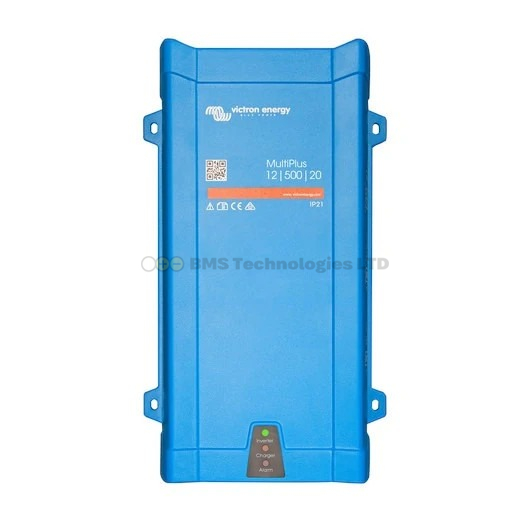
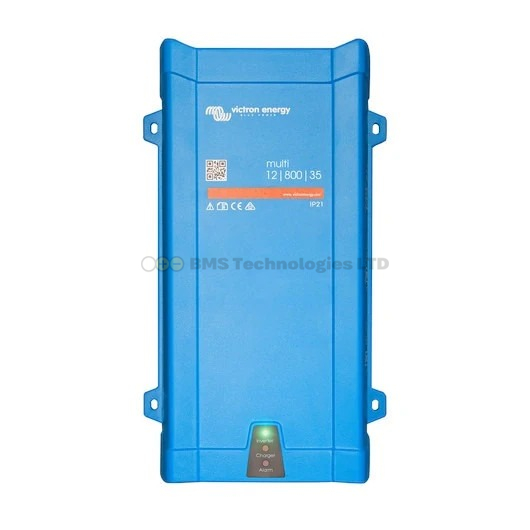
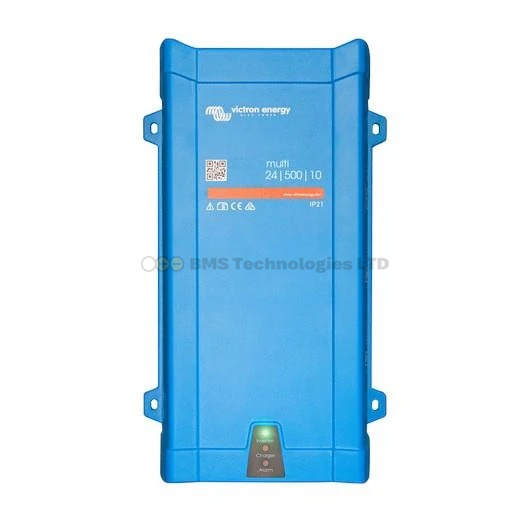
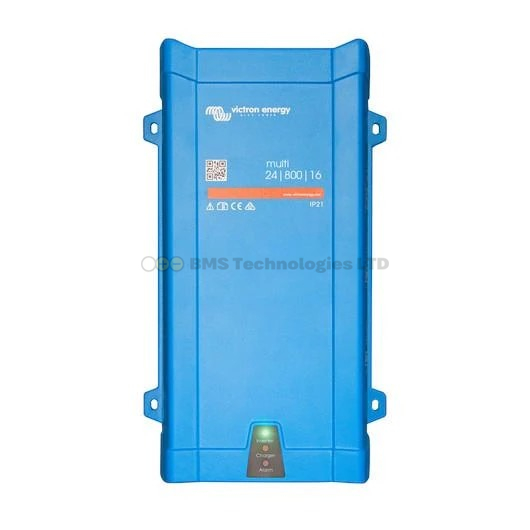
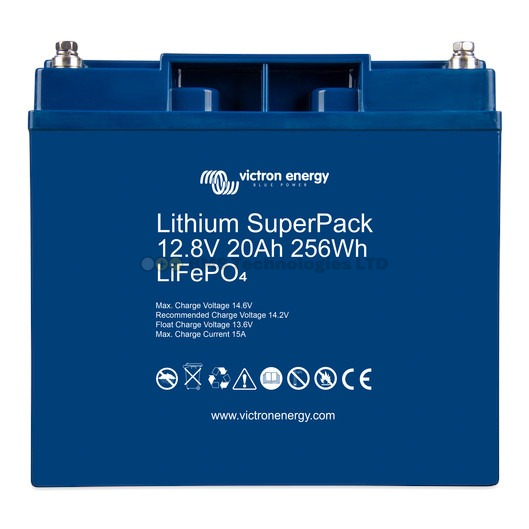
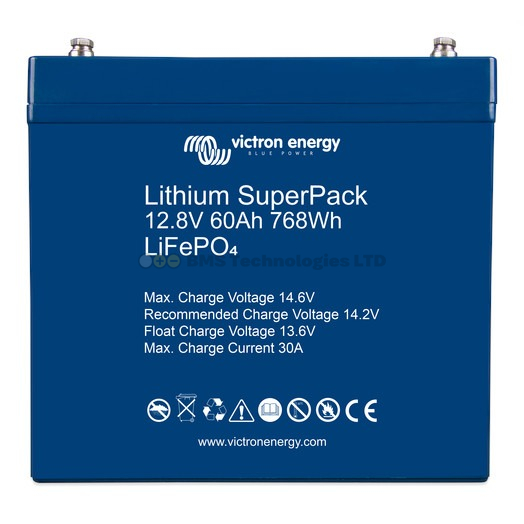
Victron takes a modular approach. You choose the inverter/charger (MultiPlus-II or Quattro), then add as many battery modules as you need. A Victron system might start with a single 5 kWh battery and grow to 40 kWh over time by adding more modules. You can also mix battery sizes (within the same chemistry and voltage), and the system scales without replacing the core components.
For a household with straightforward needs — one battery, grid-tied, solar self-consumption — the Powerwall's simplicity is an advantage. For anything more complex or likely to grow, Victron's modularity wins clearly.
Off-Grid Capability
This is where the two systems diverge most sharply.
The Tesla Powerwall is designed primarily as a grid-tied battery. It can provide backup power during grid outages (with the Backup Gateway), but it is not designed for sustained off-grid use. You cannot run a Powerwall-only system without a grid connection indefinitely, and it lacks the generator integration and flexible AC input handling that true off-grid demands.
A Victron system is genuinely off-grid capable. The MultiPlus and Quattro inverter/chargers were originally designed for marine and off-grid applications. They handle generator input, transfer switching, variable AC sources, and can run indefinitely without grid power. If you are building a property with no mains connection, or want a system that works equally well on-grid and off-grid, Victron is the only viable option of the two.
Solar Panel Compatibility
The Powerwall 3 has an integrated solar inverter, meaning you must use Tesla's system for solar input. The Powerwall 2 can work with any existing solar inverter, but the solar system must be AC-coupled (the solar inverter feeds AC into the home, and the Powerwall charges from that).
Victron supports both DC-coupled solar (panels connect directly to a Victron MPPT charge controller, which feeds the battery) and AC-coupled solar (a separate solar inverter feeds AC into the system). DC coupling is more efficient and gives more control, particularly for off-grid and hybrid systems. If you already have a solar array with a specific inverter, Victron can integrate with it. If you are installing fresh, DC coupling via a Victron SmartSolar MPPT gives the best performance.
Monitoring and Control
The Tesla app is polished and consumer-friendly. It shows real-time energy flow, daily/monthly statistics, and allows basic mode changes (self-consumption, time-based control, backup reserve). It is designed for homeowners who want a simple, intuitive interface.
The Victron VRM portal is more powerful but less consumer-oriented. It provides detailed system data: individual component status, historical graphs, error logs, remote configuration, and firmware updates. For technically minded users, VRM offers far more insight and control. The VRM portal also supports Node-RED for automation and MQTT for integration with home automation platforms like Home Assistant.
The VictronConnect app handles local Bluetooth configuration of individual components — useful for initial setup and troubleshooting without needing internet access.
Installation and UK Regulations
Tesla Powerwalls must be installed by a Tesla-certified installer. In the UK, this means a limited pool of approved companies. Installation is typically bundled — you choose an installer, they handle everything. This is simpler for the homeowner but limits your choice and negotiating power.
Victron systems can be installed by any qualified electrician who is competent with battery storage systems. For SEG (Smart Export Guarantee) eligibility on the solar element, you need an MCS-accredited installer, but the battery side does not require MCS. This wider installer base often means more competitive pricing and greater flexibility in system design.
Both systems require DNO notification under G98 (up to 3.68 kW single-phase) or G99 (above 3.68 kW) regulations. The Tesla Backup Gateway handles grid code compliance automatically. For Victron, the installer configures G98/G99 compliance through the ESS Assistant in VEConfigure — a straightforward process for experienced Victron installers.
Cost Comparison
Direct price comparison is complicated because the two systems are structured differently. Tesla sells a complete unit; Victron is component-based.
| Component | Tesla | Victron Equivalent |
|---|---|---|
| Battery (13.5 kWh) | Included in Powerwall price | 3 x Victron 25.6V/200Ah Smart = 15.4 kWh (~£6,000-7,500) |
| Inverter/charger | Included | MultiPlus-II 48/5000 (~£1,400-1,800) |
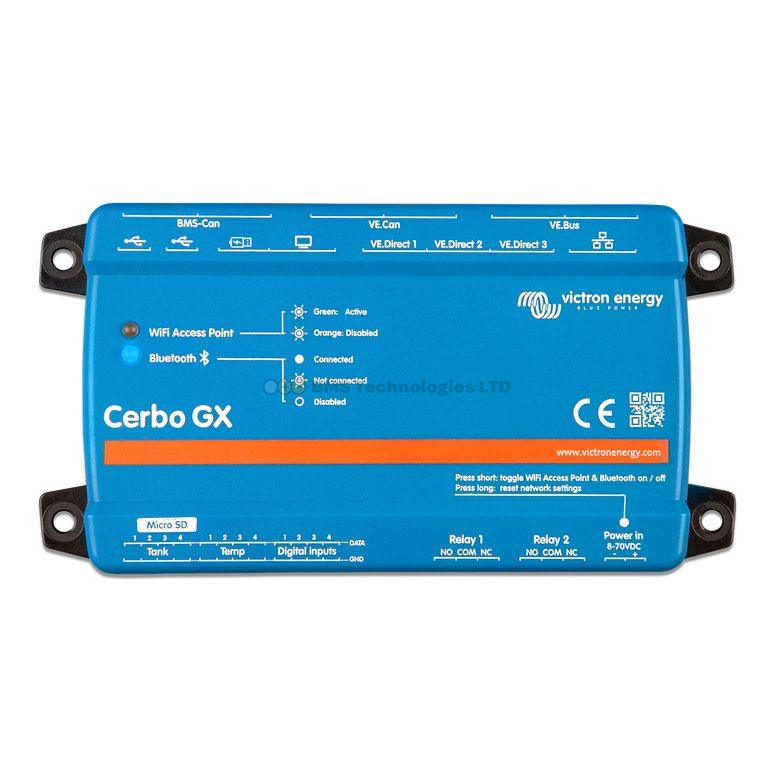
| System controller | Included | Cerbo GX (~£300-400) |
| Energy meter | Included (Backup Gateway) | ET112 or ET340 (~£100-180) |
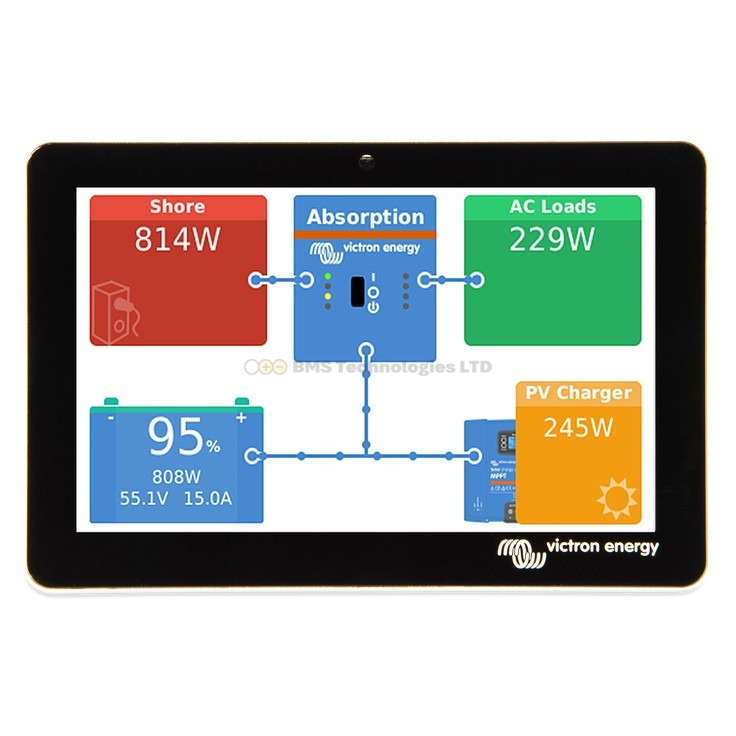
| Display | Tesla app (free) | GX Touch 50 (~£180) or VRM (free) |
| Total hardware | ~£8,000-10,000 | ~£8,000-10,000 |
| Installation | £1,500-3,000 | £1,000-2,500 |
Hardware costs are broadly similar for equivalent capacity. The Victron system may be slightly cheaper if you choose third-party LiFePO4 batteries (Pylontech, BYD) instead of Victron's own batteries — these are fully compatible via DVCC (Distributed Voltage and Current Control) on the Cerbo GX.
Where Victron can be significantly cheaper is at larger capacities. Scaling a Powerwall system from 13.5 kWh to 27 kWh means buying a second complete Powerwall. With Victron, you add battery modules to the existing system — no duplicate inverter or controller needed.
Battery Chemistry: NMC vs LiFePO4
Tesla uses NMC (nickel manganese cobalt) lithium-ion cells. Victron recommends LiFePO4 (lithium iron phosphate). This matters:
- Safety — LiFePO4 is inherently more thermally stable. It does not experience thermal runaway under normal conditions. NMC has a higher energy density but requires more sophisticated thermal management
- Cycle life — LiFePO4 typically offers 3,000-5,000+ cycles at 80% depth of discharge. NMC typically offers 2,000-3,000 cycles. For daily cycling (ESS/tariff shifting), LiFePO4 lasts longer
- Energy density — NMC stores more energy per kilogram, which is why Tesla can pack 13.5 kWh into a compact wall-mounted unit. LiFePO4 batteries are physically larger for the same capacity
- Temperature tolerance — LiFePO4 performs better in cold conditions and degrades less at high temperatures. Relevant for UK garage installations where temperatures can drop near freezing
Reliability and Support
Tesla's consumer brand means mainstream support channels, but also means your system is one of millions. If Tesla discontinues a product line or changes its software platform, you are dependent on their decisions.
Victron has been manufacturing power electronics since 1975, primarily for marine and industrial markets. Their products are designed for longevity and repairability. Components are individually replaceable — if a single battery module fails after 8 years, you replace that module, not the entire system. The Cerbo GX runs open-source software (Venus OS), which means community support and long-term software updates even if hardware is no longer sold.
When Tesla Powerwall Makes More Sense
- You want a simple, plug-and-play solution with minimal configuration
- You prefer a single-brand ecosystem (Tesla solar, Powerwall, Tesla app)
- You want compact physical size — the Powerwall is slim enough to mount on a garage wall without taking up floor space
- You do not need off-grid capability or generator integration
- You value polished consumer software over technical depth
When Victron Makes More Sense
- You need or want off-grid capability, even partially
- You want to grow the system over time — start small, expand later
- You have an existing solar array you want to integrate without replacing the inverter
- You want generator integration for backup charging
- You need more than 13.5 kWh and want cost-effective scaling
- You want deep technical control — remote configuration, automation, Home Assistant integration
- You are in a rural location with unreliable grid supply and need serious backup power
- You want component-level repairability — replace individual parts rather than the whole unit
The Hybrid Approach
Some UK installers now offer hybrid systems: Victron inverter/charger with third-party batteries (Pylontech US5000, BYD HVS) that compete with Powerwall on price while retaining Victron's flexibility. This can offer the best of both worlds — competitive pricing with full off-grid capability and expandability. The Victron Cerbo GX manages these third-party batteries via CAN bus communication through its DVCC feature.
Verdict
For a typical UK home that wants to maximise solar self-consumption and shift energy to cheaper tariff periods, both systems perform well. The Tesla Powerwall is the easier choice for non-technical homeowners who want to install and forget. Victron is the better choice for anyone who wants flexibility, expandability, off-grid capability, or deep system control. The cost difference between the two is small enough that the decision should be driven by your requirements rather than price alone.
For help sizing a Victron-based home battery system, see our ESS scheduled charging guide and use the system builder tool to match components to your household's needs.