One of the most common questions from campervan and motorhome owners is whether they can run a coffee machine from their battery system. The short answer is yes — but the inverter and battery requirements depend entirely on which type of coffee machine you use. This guide covers the real-world power demands of every popular coffee machine type and recommends the right Victron inverter for each.
Coffee Machine Types and Their Power Draw
| Coffee Machine Type | Typical Wattage | Peak (Startup) Wattage | Time Per Coffee | Energy Per Coffee |
|---|---|---|---|---|
| Manual (Aeropress, cafetiere, pour-over) | 0W (heat water separately) | 0W | N/A | 0 Wh from inverter |
| Nespresso / capsule machine | 1,200–1,300W | Up to 1,500W | 1–2 minutes | 20–40 Wh |
| Espresso machine (Sage/Breville style) | 1,200–1,500W | Up to 1,800W | 2–3 minutes (incl. heat-up) | 40–75 Wh |
| Bean-to-cup (DeLonghi, Jura) | 1,300–1,500W | Up to 1,800W | 2–4 minutes | 45–100 Wh |
| Filter/drip machine | 800–1,200W | Up to 1,400W | 5–10 minutes | 70–200 Wh |
| 12V travel coffee maker | 120–200W (12V direct) | 200W | 10–15 minutes | 30–50 Wh |
The Real-World Battery Impact
Running a coffee machine sounds power-hungry — 1,200W is a lot. But remember, you only run it for a minute or two per coffee. Let's do the maths for the most popular choice, a Nespresso machine:
- Power draw: 1,200W for approximately 90 seconds (heating + extraction)
- Energy used: 1,200W x (90/3600) hours = 30 Wh per coffee
- At 12V: 30 Wh / 12V = 2.5 Ah per coffee
- Including inverter losses (~10%): approximately 2.8 Ah per coffee
Making two coffees in the morning uses roughly 5.6 Ah from a 12V battery. On a 200Ah lithium battery, that's less than 3% of your total capacity. Even on a 100Ah battery, it's under 6%. The energy cost of a coffee is far less than most people expect.
Comparison: Other Ways to Make Coffee
| Method | Energy from Battery | 12V Ah (per coffee) | Notes |
|---|---|---|---|
| Nespresso via inverter | ~30 Wh | ~2.8 Ah | Quick, convenient, requires inverter |
| Kettle via inverter (for cafetiere) | ~100 Wh | ~9.2 Ah | Boils 500ml, much more energy than Nespresso |
| Gas hob + stovetop kettle | 0 Wh | 0 Ah | Uses gas instead, no battery impact |
| 12V travel coffee maker | ~40 Wh | ~3.3 Ah | Slow (10+ mins), no inverter needed |
Interestingly, using a Nespresso machine via an inverter is more energy-efficient from your battery than boiling a kettle for a cafetiere, because the Nespresso only heats a small amount of water at a time. If battery conservation is your priority, a Nespresso is actually a smart choice compared to a kettle.
Which Victron Inverter for Which Machine?
Nespresso / Capsule Machines (1,200–1,300W)
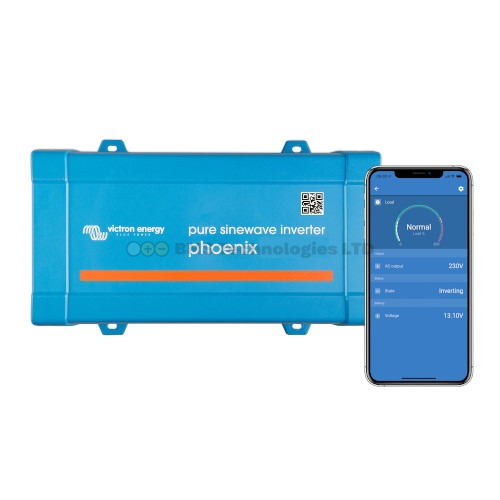
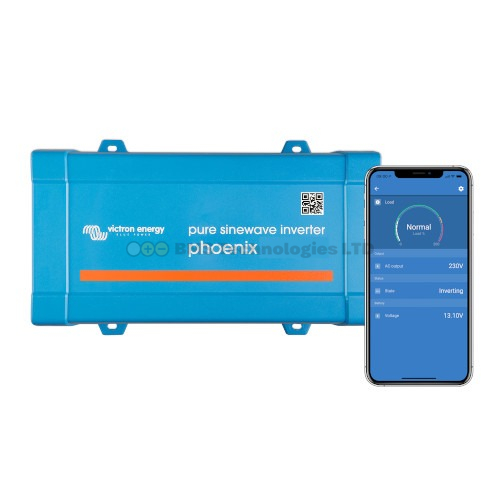
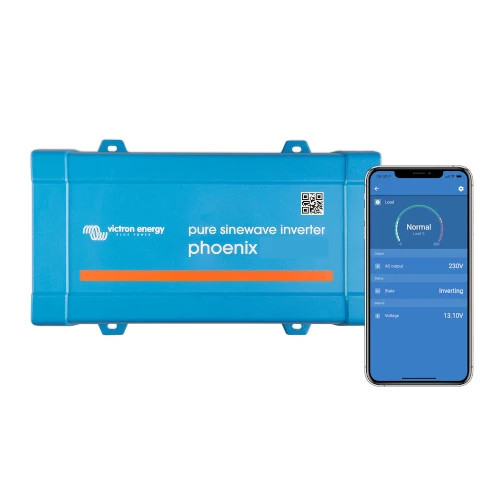
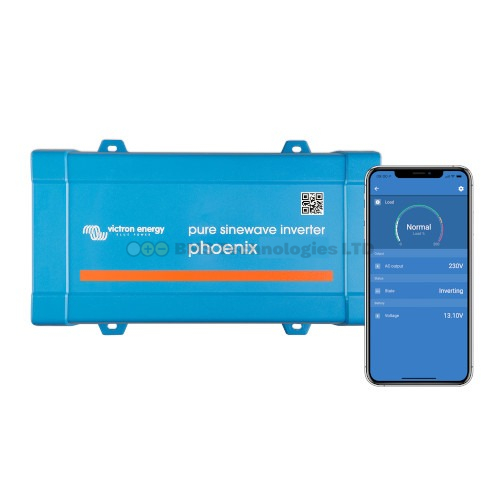
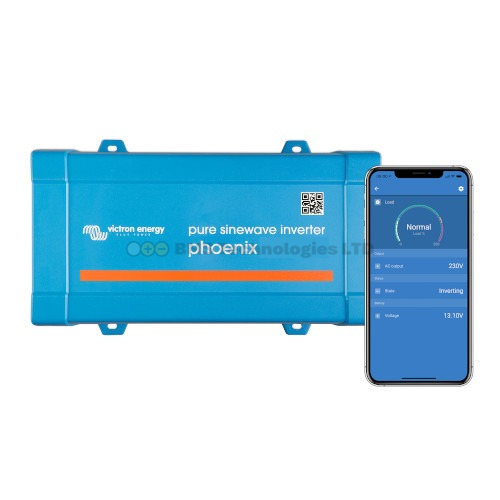
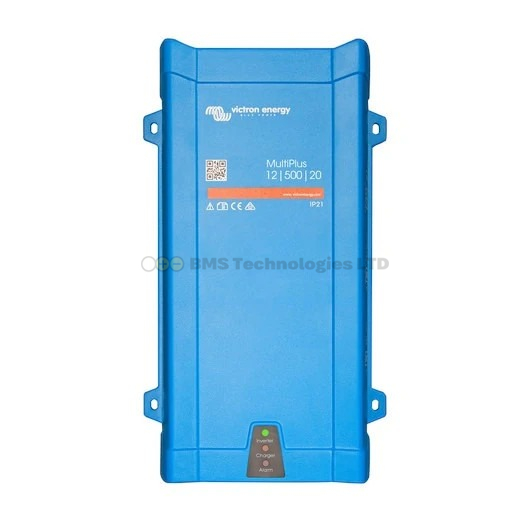
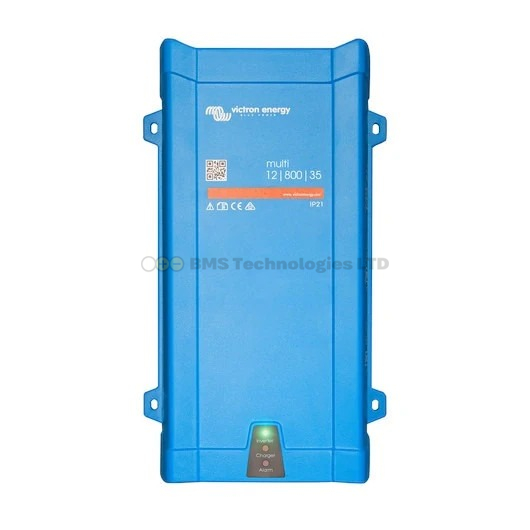
Recommended minimum: Victron Phoenix 12/1600 or MultiPlus 12/1600/70
A Nespresso draws around 1,200W continuously with startup peaks up to 1,500W. The Phoenix 1600VA handles this comfortably. While a Phoenix 1200VA has a 1,200W continuous rating, the startup surge can exceed it and cause the inverter to cut out. The 1600VA provides the necessary headroom for reliable operation.
Don't be tempted to use a cheap modified sine wave inverter. Nespresso machines use electronic controls and pumps that require a pure sine wave output. All Victron inverters produce pure sine wave power.
Espresso and Bean-to-Cup Machines (1,300–1,500W)
Recommended minimum: Victron Phoenix 12/1600 or MultiPlus 12/1600/70
Higher-end espresso machines with built-in grinders or steam wands can draw up to 1,500W with peaks around 1,800W. The 1,600VA Phoenix or MultiPlus handles most models, but check your specific machine's peak wattage. Some professional-style espresso machines exceed 1,800W and would need a 2,000VA or 3,000VA inverter.
Filter Coffee Machines (800–1,200W)
Recommended minimum: Victron Phoenix 12/1200
Most filter machines draw 800–1,000W with modest startup peaks. A Phoenix 12/1200 is usually sufficient. However, filter machines run for 5–10 minutes, which means they consume far more total energy per session than a quick-shot capsule machine — typically 70–200Wh compared to 30Wh for a Nespresso.
Manual Methods (Aeropress, Cafetiere, Pour-Over)
No inverter needed — boil water on your gas hob and you use zero battery power. If you want to boil water electrically, you'll need a powerful inverter for a kettle (see our guide on what you can run on different inverter sizes), but a gas-heated kettle is the energy-efficient option.
Practical Tips for Running a Coffee Machine
Pre-Heat on Shore Power
If you're on a campsite hookup, run the coffee machine directly from shore power rather than from battery via the inverter. With a MultiPlus, this happens automatically — shore power flows through the transfer switch to your AC sockets. With a standalone inverter, switch to your shore power circuit before making coffee.
Morning Coffee from Solar
In summer, your solar panels may already be producing good power by 8–9am. With a SmartSolar MPPT charging your batteries, the energy used for a coffee is replaced within 15–30 minutes of decent sunlight. Time your morning brew for after the sun hits the panels and the net impact is close to zero.
Battery State of Charge
A coffee machine draws roughly 100A from a 12V battery during operation (1,200W / 12V = 100A). While this is a large current, it only lasts 1–2 minutes. Your SmartShunt will show a significant power draw while the machine runs, but the actual Ah consumed is minimal. Don't be alarmed by the high instantaneous current reading.
Ensure your battery cables and fuse ratings can handle this current. For a system regularly running a coffee machine, main battery cables of 50mm2 with a 200A fuse are appropriate.
Inverter Placement and Ventilation
When a coffee machine is running, the inverter works hard and generates heat. Ensure your Phoenix or MultiPlus has adequate ventilation. Don't bury it in a sealed cupboard without airflow — the inverter will thermally derate or shut down if it overheats.
Our Recommendation
For most campervan owners who want convenient coffee, a Nespresso machine paired with a Victron Phoenix 12/1600 or MultiPlus 12/1600/70 is the optimal solution. It's quick (under 2 minutes per coffee), energy-efficient (under 3Ah per coffee), produces excellent results, and works reliably with a 1,600VA inverter.
Budget the coffee machine into your daily power calculations (allow 60 Wh per day for two coffees), and make sure your inverter and cabling are rated appropriately. For the best prices on Victron inverters, check our price comparison tool.