Shore power (hookup) is the simplest way to charge your motorhome's leisure batteries while on a campsite. But getting the most from your hookup — and avoiding tripped breakers — requires understanding how your charging system works. This guide covers everything from plugging in to optimising your charge setup.
How Shore Power Works in a Motorhome
When you connect a campsite hookup cable to your motorhome, 230V AC mains electricity flows into your vehicle. This power serves two purposes:
- Powering AC appliances directly: Mains sockets, air conditioning, microwave, and any other 230V devices.
- Charging batteries via a charger: A built-in or separate battery charger converts the AC power to DC for charging your leisure batteries.
Both functions happen simultaneously, which is why understanding your total power draw is important.
UK Campsite Hookup Ratings
| Hookup Type | Current Rating | Power Available | Common At |
|---|---|---|---|
| Standard UK campsite | 16A | 3,680W | Most UK campsites |
| Small/basic site | 10A | 2,300W | Some CL sites, farms |
| European campsite | 6A–10A | 1,380–2,300W | France, Spain, Italy |
| Marina/harbour | 16A | 3,680W | UK marinas |
Important: European campsites often have lower ratings than UK sites. If you tour Europe, your charging and power usage strategy needs to account for 6A or 10A supplies.
Choosing a Charging Setup
You have three options for charging leisure batteries from shore power:
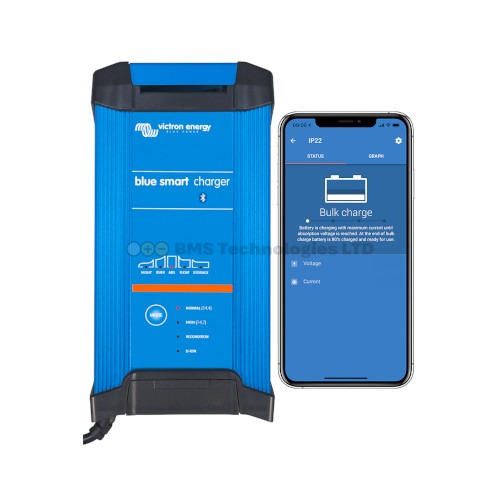
Option 1: Standalone Battery Charger
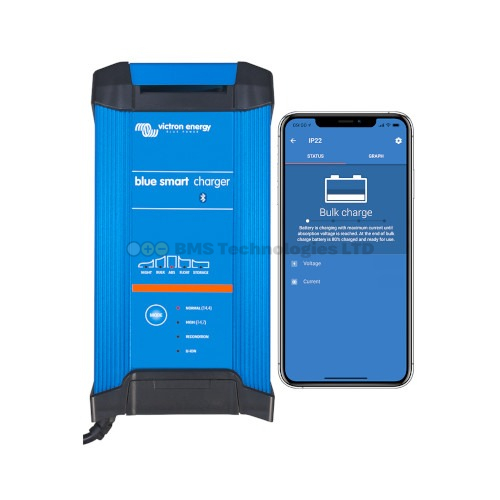
A dedicated charger like the Victron Blue Smart IP22 connects to shore power and charges your batteries. This is the simplest and cheapest approach.
Pros: Simple, affordable, easy to install.
Cons: No automatic changeover between shore and inverter power. AC appliances only work when plugged in.
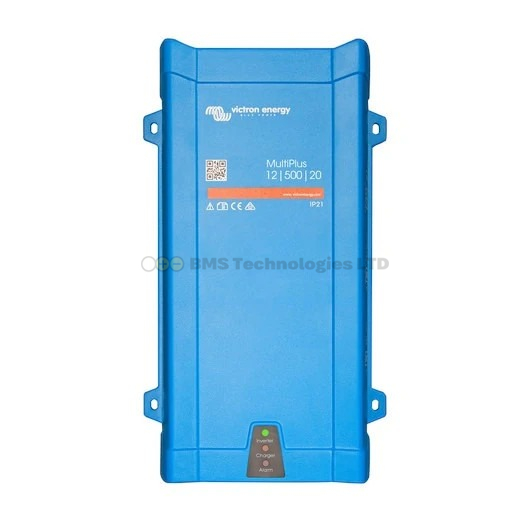
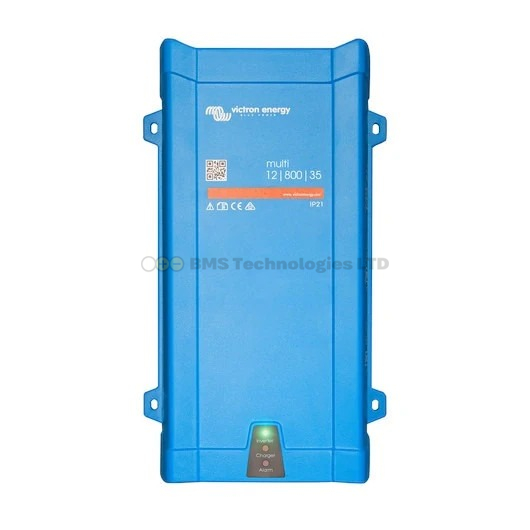
Option 2: Victron MultiPlus (Inverter/Charger)
The MultiPlus combines an inverter, charger, and transfer switch. When you plug into shore power, it automatically charges batteries and passes AC through to your sockets. When you unplug, it seamlessly switches to inverter mode — your AC sockets continue to work from battery power.
Pros: Seamless shore/battery transition, PowerAssist for weak hookups, integrated solution.
Cons: More expensive, more complex installation.
Option 3: EasySolar (All-in-One)
The Victron EasySolar combines an MPPT solar charge controller and a MultiPlus inverter/charger in one unit. It handles solar charging, shore power charging, and inverting — the complete solution in a single box.
Pros: Everything in one unit, saves space, simplified wiring.
Cons: Premium price, less flexibility than separate components.
Optimising Shore Power Charging
Set the Right Charge Current
Don't set your charger to maximum and forget about it. Consider your total power draw:
Available charging power = Shore power limit - AC appliance load
On a 16A hookup (3,680W) with a 1,200W microwave running: 3,680W - 1,200W = 2,480W available for charging. At 12V, that's about 170A of potential charge current — far more than any standalone charger draws.
The risk is running high-power appliances (kettle + microwave) while the charger is at full output. With a MultiPlus, PowerControl manages this automatically. With a standalone charger, you need to be mindful of total draw.
Charge Overnight
The most efficient strategy: arrive at the campsite, plug in, and let the charger work overnight when you're not using high-power appliances. By morning, your batteries are full.
With a 20A charger and a 200Ah lithium battery at 50% SOC, overnight charging (8 hours) easily brings the battery to 100%. Even a 100Ah AGM battery at 50% SOC only needs about 4–5 hours with a 20A charger.
Don't Forget the Starter Battery
If your motorhome sits on a campsite for a week without the engine running, the starter battery can discharge from alarm systems, clocks, and parasitic drains. A three-output charger keeps both leisure and starter batteries healthy.
European Touring Tips
European campsites often provide only 6A or 10A of shore power. To make this work:
- Set your MultiPlus input current limit to match the supply (6A or 10A).
- Avoid running high-power appliances while charging — at 6A, you only have 1,380W total.
- Use gas for cooking and heating instead of electrical appliances to leave more power for charging.
- Charge batteries overnight when appliance loads are minimal.
- Supplement with solar — even 200W of solar significantly reduces your reliance on weak hookups.
Wiring Considerations
Hookup Cable
Use a proper camping hookup cable rated for 16A with a blue CEE plug (IEC 60309). Cheap or damaged cables can overheat and cause fires. Inspect your cable for damage before each trip.
Consumer Unit / RCD
Your motorhome should have a consumer unit with an RCD (Residual Current Device) that trips if it detects a fault. This is a legal requirement in the UK for motorhome electrical installations. Ensure it's tested regularly.
Earth Connection
Some older campsites have poor earthing. If your RCD trips immediately on connection, the site's earthing may be inadequate. Try a different hookup point, or use the site's earth bonding point if available.
Monitoring Your Charge
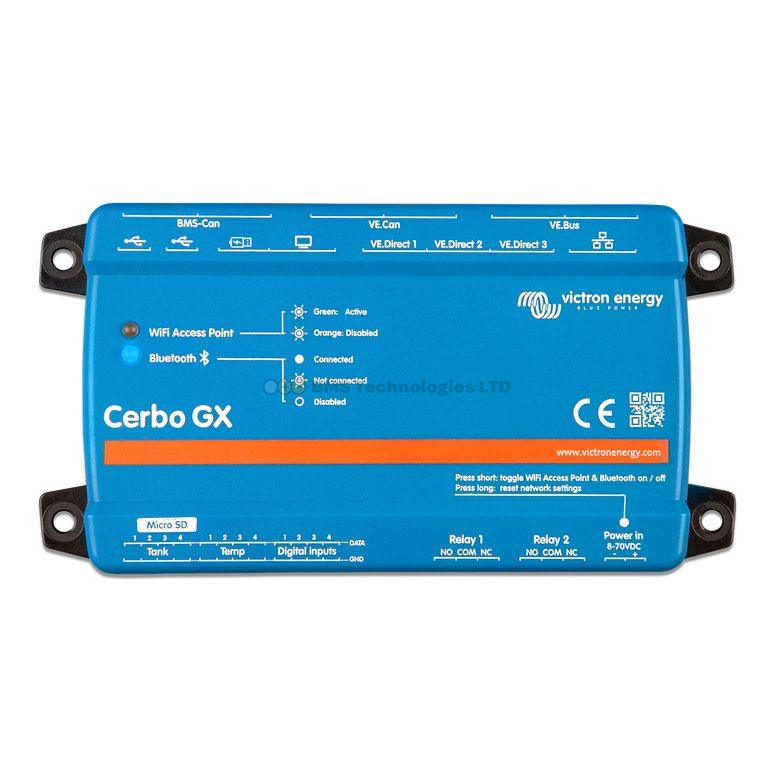
With a Victron SmartShunt or BMV battery monitor, you can see exactly how much current is flowing into your batteries and track state of charge in real-time. Combined with a Cerbo GX and VRM, you can even monitor remotely — handy for checking if your batteries are full before heading back from a day out.
Summary
Shore power charging is the most reliable way to maintain full batteries on a motorhome. For the best experience, use a MultiPlus for seamless shore/inverter switching with PowerControl to prevent breaker trips. Set the input current limit to match your hookup supply, charge overnight when loads are low, and supplement with solar for days between hookups. For European touring, be prepared for weaker 6–10A supplies by managing your electrical loads carefully.