If you have a separate inverter and shore power supply that both need to feed the same AC circuits, you need a transfer switch. Victron offers two solutions: the dedicated Filax 2 transfer switch and the built-in transfer switch inside every MultiPlus inverter/charger. This guide explains when you need a standalone Filax 2, when the MultiPlus handles the job on its own, and why the switchover speed matters.
What Does a Transfer Switch Do?
A transfer switch automatically selects between two AC power sources. In a typical setup, one source is mains power (shore power, grid, or generator) and the other is an inverter running from batteries. When mains power is available, the transfer switch connects it to your circuits. When mains drops out, the switch changes over to inverter power. The critical specification is how quickly that changeover happens.
Without a transfer switch, you would need to manually swap cables between power sources, or risk back-feeding one source into another — a serious safety hazard that can damage equipment and endanger life.
The Victron Filax 2: Ultra-Fast Standalone Transfer Switch
What It Is
The Filax 2 is a dedicated, standalone automatic transfer switch. It has two AC inputs and one AC output. It selects between the two inputs and passes the chosen source through to the output. It does nothing else — no inverting, no charging, no power conversion.
Key Specifications
| Specification | Filax 2 |
|---|---|
| AC inputs | 2 (priority-based) |
| AC output | 1 |
| Maximum current | 16A (3,680W at 230V) |
| Switchover time | Less than 20 milliseconds |
| Voltage range | 180–265V AC, 45–65Hz |
| Dimensions | DIN rail mount, 8 modules wide |
The headline feature is the sub-20ms switchover time. This is fast enough that most electronic equipment — including computers, servers, and network switches — will not notice the changeover at all. For context, a typical desktop computer can tolerate a power interruption of around 20–30ms before it resets or shuts down.
When You Need a Filax 2
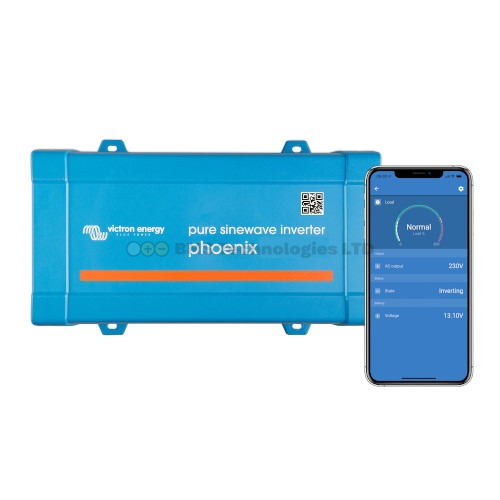
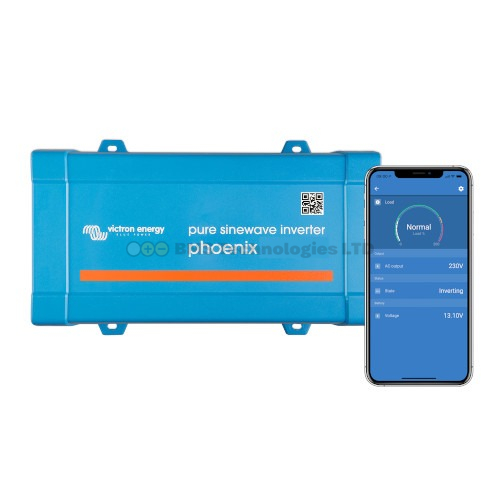
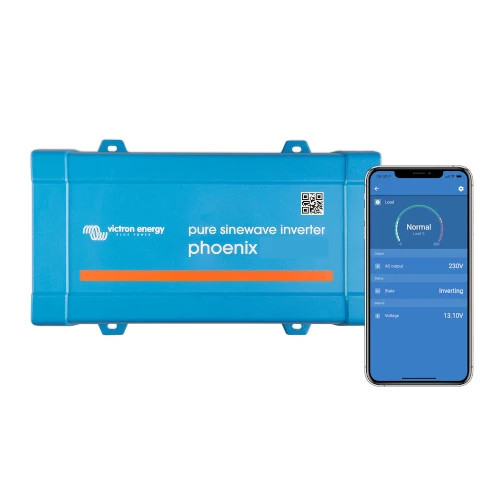
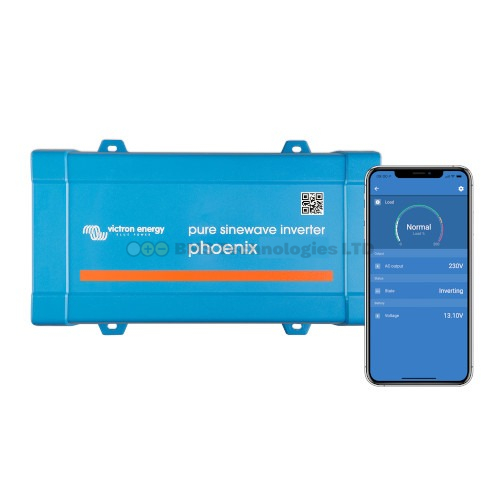
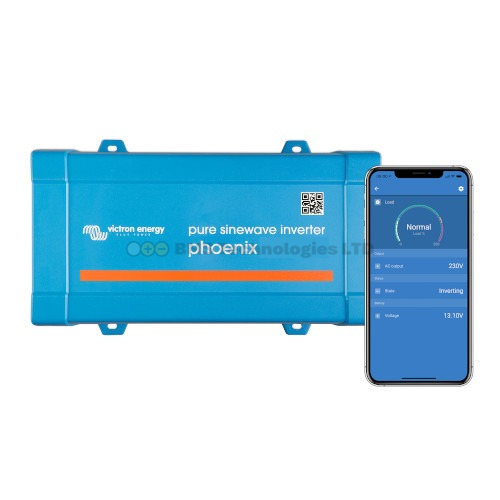
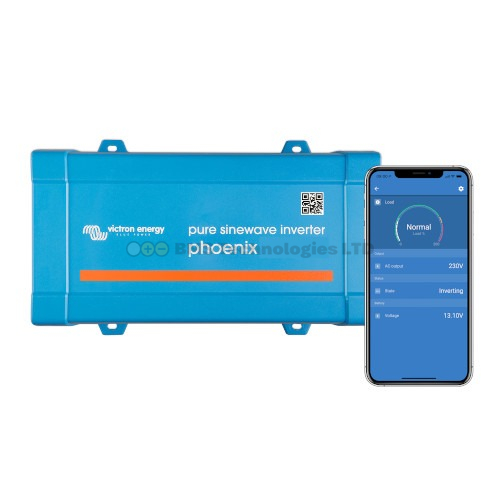
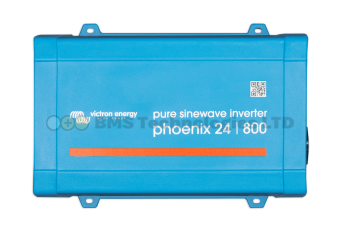
The Filax 2 is required when you have a separate inverter (such as a Phoenix inverter) that needs to share circuits with shore power or a generator. A typical scenario:
- You have a Phoenix inverter producing 230V AC from batteries
- You also have a shore power connection providing 230V AC
- Both need to feed the same consumer unit or circuit panel
- You need automatic, seamless switching between them
Without the Filax 2 (or equivalent), you cannot safely connect two independent AC sources to the same circuit. The Filax 2 ensures only one source is connected at any time.
The MultiPlus Built-In Transfer Switch
How It Works
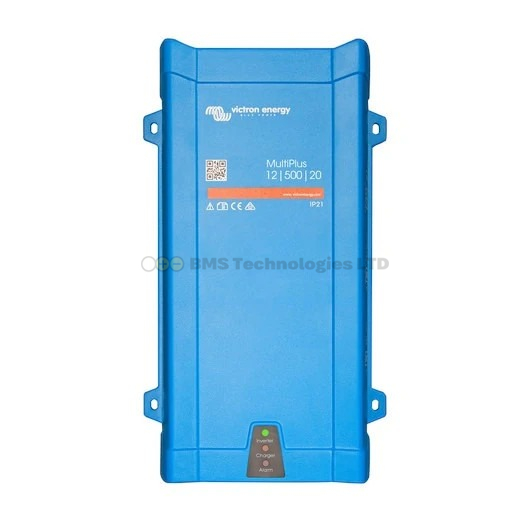
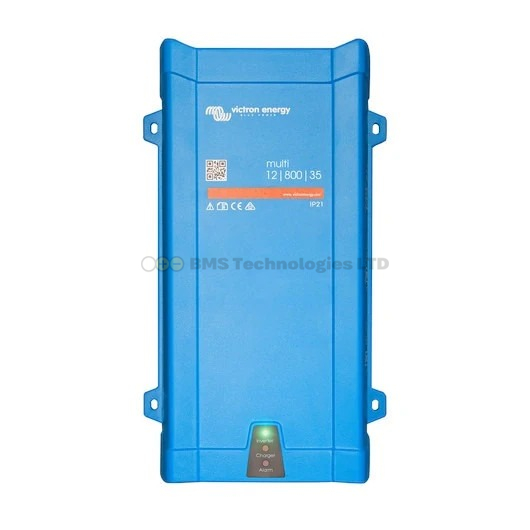
Every Victron MultiPlus and MultiPlus-II has an integrated automatic transfer switch. When shore power is connected to the AC input, the MultiPlus passes it through to the AC output while simultaneously charging the batteries. When shore power is lost, the MultiPlus switches to inverter mode and powers the AC output from the batteries.
Switchover Speed
The MultiPlus transfer switch has a switchover time of approximately 20 milliseconds — comparable to the Filax 2. Victron's specification states less than 20ms, making it fast enough for most electronic equipment to ride through the transition without interruption. In practice, both the Filax 2 and MultiPlus achieve similar changeover performance.
When the MultiPlus Is Sufficient
If you are using a MultiPlus as your inverter/charger, you almost certainly do not need a Filax 2. The MultiPlus already handles the transfer switching internally. Your wiring is straightforward:
- Shore power connects to the MultiPlus AC input
- MultiPlus AC output connects to your consumer unit
- The MultiPlus manages source selection automatically
This is the standard configuration for the vast majority of motorhome, campervan, boat, and off-grid installations. The all-in-one approach means fewer components, simpler wiring, and lower cost.
Filax 2 with Phoenix Inverter vs MultiPlus All-in-One
The key architectural decision is whether to use a separate inverter with a Filax 2, or a MultiPlus that combines inverter, charger, and transfer switch in one unit.
| Feature | Phoenix Inverter + Filax 2 | MultiPlus (all-in-one) |
|---|---|---|
| Transfer switching | Filax 2 (external) | Built-in |
| Battery charging | Separate charger required | Built-in |
| Inverter | Phoenix inverter | Built-in |
| Component count | 3+ devices | 1 device |
| Typical cost (12V/2000VA) | £700–900 total | £550–700 |
| Switchover speed | <20ms | <20ms |
| Flexibility | Higher — components can be replaced independently | Lower — single unit does everything |
| Wiring complexity | More complex | Simpler |
| PowerAssist | Not available | Available (supplements shore power from batteries) |
Reasons to Choose Phoenix + Filax 2
- Existing installation: you already have a Phoenix inverter and a separate charger, and adding a Filax 2 is simpler than replacing everything with a MultiPlus
- Redundancy: if the inverter fails, the Filax 2 still passes shore power through; if the MultiPlus fails, you lose everything
- Specific inverter requirements: the Phoenix inverter range includes models (such as the Phoenix 48/5000) that have no MultiPlus equivalent at the same specification
- Separation of concerns: in larger or commercial installations, having independent components can simplify maintenance and fault-finding
Reasons to Choose the MultiPlus
- Cost: a single MultiPlus is almost always cheaper than buying a Phoenix inverter, separate charger, and Filax 2
- Simplicity: one device, one set of connections, one point of configuration
- PowerAssist: the MultiPlus can supplement a limited shore power supply by drawing extra power from the batteries — a feature that is impossible with a Phoenix + Filax 2 setup
- Space: one unit takes less room than three separate devices
- Integration: a single VE.Bus connection to a Cerbo GX provides full monitoring and control
Use Cases Requiring Ultra-Fast Transfer
IT and Network Equipment
Servers, NAS units, networking gear, and desktop computers are sensitive to power interruptions. Even a 50ms gap can cause a server to reboot or a NAS to initiate a file system check. The sub-20ms switchover of both the Filax 2 and MultiPlus keeps these devices running through transitions. If you are running IT equipment from your Victron system — for example, on a liveaboard boat or in a remote office — transfer switching is essential.
Medical Equipment
CPAP machines, oxygen concentrators, and other medical devices need continuous power. A Victron system with proper transfer switching provides this reliability. For critical medical applications, the Filax 2's dedicated simplicity can be preferable — it has fewer potential failure modes than a MultiPlus, though either solution meets the switchover speed requirements.
Audio and Video Equipment
Recording equipment, broadcast gear, and professional AV systems can lose data or produce audible glitches during power transitions. The sub-20ms changeover is fast enough to prevent interruption in most professional equipment.
UK Wiring Regulations for Transfer Switches
Transfer switch installations in the UK must comply with BS 7671 (IET Wiring Regulations). Several key requirements apply:
- Regulation 551.7: covers switching between alternative or additional supplies. The transfer switch must prevent interconnection of the two sources at all times.
- Double-pole switching: the transfer switch must break both line and neutral. The Filax 2 is a double-pole device and meets this requirement.
- Earthing: correct earth bonding must be maintained regardless of which source is active. The MultiPlus has a ground relay that handles this automatically; with a Filax 2 setup, you need to ensure earthing is properly configured for both sources.
- Labelling: all supplies must be clearly labelled at the consumer unit, identifying which circuits are fed by the transfer switch and which source is currently active.
- Professional installation: any work involving mains voltage connections should be carried out by a qualified electrician. In England and Wales, this is notifiable work under Part P of the Building Regulations if it involves fixed wiring in a dwelling.
For motorhomes and caravans, the relevant standard is BS EN 1648 (electrical installations in caravans and motor caravans). For boats, the standard is BS EN ISO 13297 (small craft electrical systems). Both standards require proper isolation between shore and on-board power sources.
Wiring Overview
Filax 2 Wiring
The Filax 2 has clearly labelled terminals: AC Input 1 (priority), AC Input 2, and AC Output. In a typical setup:
- Shore power connects to AC Input 1 (priority source)
- Phoenix inverter output connects to AC Input 2
- AC Output connects to the consumer unit
When shore power is present, the Filax 2 selects Input 1. When shore power fails, it switches to Input 2 (the inverter) within 20ms. When shore power returns, it switches back to Input 1. The priority input is always preferred when both sources are available.
MultiPlus Wiring
The MultiPlus is simpler because everything is internal:
- Shore power connects to MultiPlus AC In
- MultiPlus AC Out connects to the consumer unit
- The MultiPlus handles all switching internally
Common Questions
Can I use the Filax 2 with a MultiPlus?
You can, but it is rarely necessary. The main scenario is if you have a MultiPlus on one circuit and a separate power source on another, and both need to feed a common load. For a standard single-inverter installation, the MultiPlus's built-in transfer switch is sufficient.
Is the Filax 2 the same as a changeover switch?
Yes, functionally. The Filax 2 is an automatic changeover switch. Manual changeover switches are cheaper but require someone to physically flip the switch — not ideal when you are asleep and the shore power drops out at 3am.
Can I use a cheap automatic transfer switch instead of the Filax 2?
Budget ATS units are available from various manufacturers, but most have switchover times of 100–500ms — far too slow for sensitive electronics. The Filax 2's sub-20ms specification is what sets it apart. If your loads are purely resistive (heaters, kettles) and can tolerate a brief interruption, a slower ATS may suffice. For anything electronic, the Filax 2 or a MultiPlus is the safer choice.
Recommendation
For most new installations, choose a MultiPlus. It combines the inverter, charger, and transfer switch in one unit, costs less, and is simpler to install. The Filax 2 is the right choice when you have an existing Phoenix inverter setup that needs automated source switching, or when your system architecture specifically requires a standalone transfer switch. Use our price comparison tool to find the best UK prices on both the MultiPlus range and the Filax 2.